
Beam 230 Moving Head Light Buying Guide for Stage Events
Classification:
summary description]
If you've been comparing Beam 230 moving head lights, you've probably noticed that almost every supplier claims their fixture is brighter, faster, or more reliable than the competition. On paper, many of them look nearly identical. In practice, however, the differences become obvious once the lights are installed on a stage.
For venue owners, lighting rental companies, DJs, and production teams, choosing the wrong fixture usually means higher maintenance costs, inconsistent performance, or disappointing beam effects during a show. That's why it is worth looking beyond the specification sheet and weighing the criteria that matter most to your use case.
This guide explains what a Beam 230 moving head light actually offers, where it performs best, and what to pay attention to before placing an order so you can choose with confidence.
What Is a Beam 230 Moving Head Light?
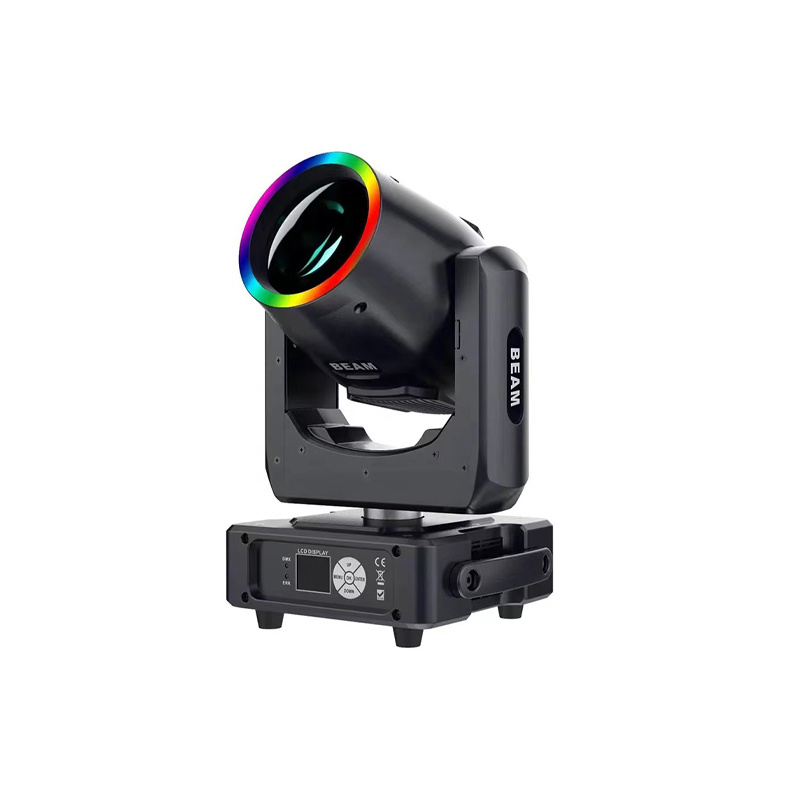
A Beam 230 is a professional moving head fixture built around a 230W discharge lamp. Unlike wash lights that spread light across a large area, its job is much more focused—it creates a narrow, high-intensity beam that cuts through haze and remains clearly visible even over long distances.
That concentrated beam is exactly why this type of fixture has become a standard choice for clubs, concert stages, touring productions, and large indoor events. When several Beam 230 lights move together, they create the dramatic aerial effects audiences associate with professional lighting shows.
Most Beam 230 fixtures include features such as:
- A 230W discharge lamp
- A beam angle of around 2°–3°
- Fast pan and tilt movement
- Multiple color wheel options
- Static and rotating gobos
- Prism effects
- Frost filter (on selected models)
- DMX512 control with Auto and Sound modes
The exact specification varies from manufacturer to manufacturer, but these functions have become the industry standard, so compare them to judge the real difference between models.
Why Do So Many Buyers Still Choose Beam 230?
Lighting technology keeps evolving, yet Beam 230 fixtures continue to appear in new nightclub projects and rental inventories every year. That isn't a coincidence.
For many buyers, they simply offer the right balance between performance and cost.
A more powerful fixture doesn't always translate into a better investment. If your venue seats a few hundred people or you're supplying equipment for weddings, bars, hotels, or corporate events, the extra output of a larger fixture may never be fully utilized. In those situations, Beam 230 often delivers all the brightness you need without pushing your equipment budget unnecessarily high, making it the more practical choice.
Another reason is reliability.
Because Beam 230 fixtures have been widely used for years, replacement lamps, spare parts, and technical support are generally easier to find than for some newer models. Rental companies especially appreciate equipment that technicians already know how to service. Less downtime means more bookings and lower operating costs, which strengthens the practical appeal of this fixture.
Where Does a Beam 230 Perform Best?
Every lighting fixture has situations where it excels, and Beam 230 is no exception. It performs especially well in a few key settings.
Nightclubs
Nightclubs are probably the environment where Beam 230 lights feel most at home.
Combined with haze, laser systems, LED screens, and energetic music, the narrow beams create strong visual movement across the dance floor. Even a relatively small installation of six or eight fixtures can completely change the atmosphere of the room.
For venues that run shows several nights a week, Beam 230 strikes a good balance between visual impact and operating cost, making it a strong fit for steady nightclub use.

Concerts and Live Performances
During a concert, lighting needs to do more than simply illuminate performers. It helps build emotion, highlight key moments, and keep the audience engaged from beginning to end.
Beam 230 fixtures are commonly positioned behind performers or suspended from overhead trusses to create sweeping aerial effects. Their quick movement also allows lighting programmers to synchronize beam patterns with music, making transitions feel smooth rather than mechanical.
Because the beam remains concentrated over long distances, these fixtures are particularly effective on medium and large stages, where that reach matters most.
Rental Companies
If you operate a rental business, versatility matters just as much as brightness.
A fixture that works well for a DJ party but struggles during a corporate event isn't always a good investment. Beam 230 lights have remained popular partly because they adapt to many different applications, making them a practical option for rental businesses. One weekend they might be lighting a wedding reception, and the next they're installed for a product launch or an outdoor performance.
Previous Page
More Cases


Online Message
Quick Links
Contact Information
Address: A8 Building Meiwang Industrial Park, Guangtang south street, Huadu District,Guangzhou, China.
Phone: +86 158 1889 3706
WhatsApp:+86 158 1889 3706