
Par Can Lights: How to Choose the Best LED Stage Lighting
Classification:
summary description]
If you’re researching par can lights, you’re probably trying to solve a specific problem rather than simply looking for another lighting fixture. Maybe you’re outfitting a new stage, replacing outdated halogen cans, or planning lighting for a wedding venue, church, nightclub, or live event.
At first glance, most PAR lights seem almost identical. They share similar shapes, similar specifications, and often even similar prices. That’s exactly why many buyers end up purchasing the wrong fixtures.
The differences that actually matter—beam angle, color quality, waterproof rating, and control options—usually don’t become obvious until installation. By then, replacing the wrong fixtures can be both expensive and frustrating.
This guide walks you through the practical questions buyers ask before investing in PAR can lights, helping you choose equipment that fits your venue instead of relying on marketing claims alone.
What Are Par Can Lights?
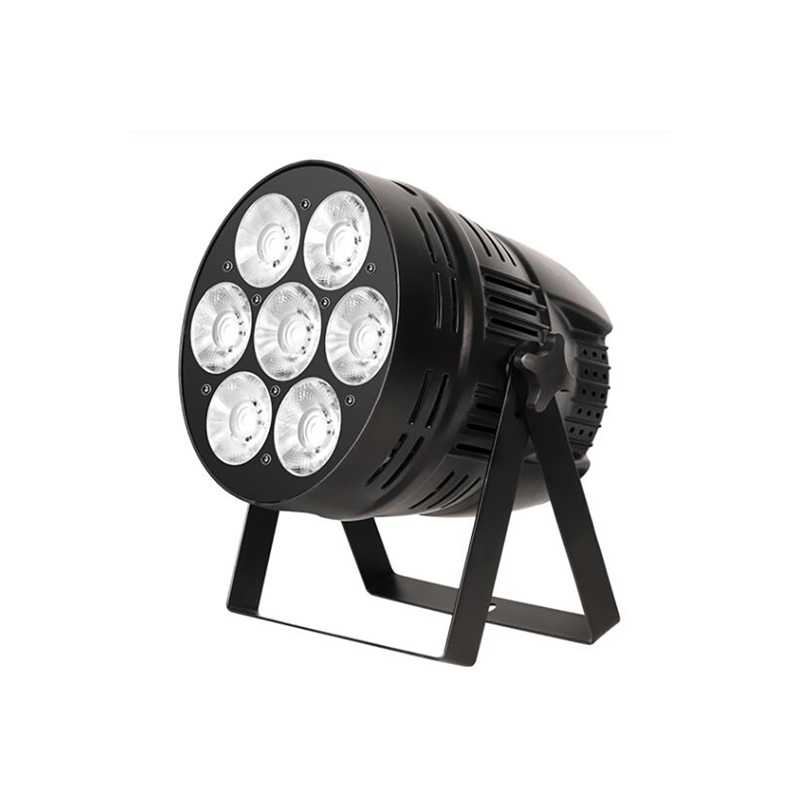
PAR stands for Parabolic Aluminized Reflector, a lighting design that has been used on stages for decades. While the original fixtures relied on halogen lamps, today’s market is almost entirely dominated by LED technology.
The reason is simple.
LED PAR lights consume far less electricity, generate significantly less heat, and offer complete color control without the need to swap color gels. For venues that operate several hours every day, those advantages quickly translate into lower running costs and easier maintenance.
Today you’ll find PAR can lights almost everywhere—from concert halls and television studios to restaurants, churches, hotels, exhibition centers, and outdoor festivals. They’re one of those fixtures that quietly do most of the work while attracting very little attention.
Why LED Par Can Lights Have Become the Industry Standard
The move from halogen to LED wasn’t driven by trends. It happened because the technology solved real problems.
Power consumption dropped dramatically. Heat output became much lower. Maintenance became simpler. Lighting designers suddenly had access to millions of colors without carrying boxes of plastic filters.
For venue owners, that meant lower electricity bills and fewer lamp replacements.
For technicians, it meant less time climbing ladders.
And for audiences, it simply meant better-looking shows.
Another benefit that’s often overlooked is reliability. A quality LED PAR fixture can easily operate for tens of thousands of hours, making it one of the most cost-effective investments in a professional lighting system.

Where Are Par Can Lights Most Commonly Used?
One of the biggest strengths of PAR can lights is flexibility. The same fixture can look completely different depending on how it’s programmed.
In a theater, PAR lights provide soft front lighting that allows performers to remain clearly visible without washing out facial expressions.
Walk into a nightclub, however, and those same fixtures may be producing deep blues, vibrant reds, or fast-changing color chases synchronized with the music.
Wedding planners often use them in a completely different way. Instead of lighting performers, they’re placed around the venue to create elegant uplighting on walls, pillars, and floral decorations.
Architectural designers rely on waterproof PAR fixtures to highlight building facades, gardens, bridges, and public spaces after dark.
The fixture stays the same. The application changes entirely.
Choosing the Right Par Can Lights
Buying PAR lights isn’t about selecting the highest wattage.
In fact, that’s one of the most common mistakes we see.
A brighter fixture doesn’t automatically create better lighting. Beam angle, installation height, ceiling color, throw distance, and control programming all influence the final result.
Before comparing specifications, ask yourself a few practical questions.
Will the lights stay indoors, or will they be exposed to rain?
Do you need soft ambient lighting or sharp beams?
Will the fixtures run independently, or do they need to integrate into a DMX-controlled lighting system?
Answering those questions first often narrows the available options far more effectively than comparing product catalogs.
Beam Angle Matters More Than Most Buyers Expect
Many buyers pay close attention to wattage but overlook beam angle.
That’s unfortunate because beam angle often has a greater impact on the finished lighting effect.
A narrow beam concentrates the light, making it ideal for highlighting performers or architectural details from a distance.
A wider beam spreads the output across a much larger area, producing smooth, even coverage that’s perfect for stage washes, wall lighting, and event venues.
Choosing the wrong beam angle usually leads to uneven lighting, dark spots, or unnecessary fixture purchases later on.
Common Buying Mistakes
Price is important. Nobody wants to overspend.
But choosing the cheapest fixture available can become surprisingly expensive.
Low-cost PAR lights often use lower-quality LEDs, inconsistent drivers, weaker cooling systems, and less reliable power supplies. Those issues rarely appear on the first day. They show up months later as brightness differences, color inconsistencies, flickering, or unexpected failures.
We’ve also seen buyers purchase outdoor fixtures for indoor venues—or worse, install indoor fixtures in permanent outdoor applications. Neither choice is ideal.
Spending a little more on reliable equipment usually costs far less than replacing an entire lighting system prematurely.
Final Thoughts
PAR can lights have remained a staple of professional lighting for one simple reason—they work.
They’re versatile, reliable, and suitable for almost every type of venue when chosen correctly.
Instead of focusing only on specifications like wattage or LED quantity, take time to evaluate how the fixtures will actually be used. Think about the venue, the mounting height, the control system, and the atmosphere you’re trying to create.
The right PAR lights won’t just illuminate a space. They’ll improve performances, create a more inviting venue, and make lighting systems easier to manage for years to come. Choose with purpose, and the results will show every time the lights come on.
More Cases


Online Message
Quick Links
Contact Information
Address: A8 Building Meiwang Industrial Park, Guangtang south street, Huadu District,Guangzhou, China.
Phone: +86 158 1889 3706
WhatsApp:+86 158 1889 3706