
Professional Kinetic Lighting Guide for Stage & Events
Classification:
summary description]
If you’ve been looking into professional kinetic lighting, you’re probably not just browsing—you’re trying to solve a specific problem. Maybe your current lighting feels flat. Maybe your venue needs something that actually stands out.
That’s exactly where kinetic lighting comes in.
It doesn’t just light a space. It changes how people experience it.
So, What Does “Professional Kinetic Lighting” Really Mean?
In simple terms, it’s a system where lights don’t stay still.
They move. Up and down. In sync. Sometimes slowly, almost floating. Other times, fast and aggressive, matching the energy of the music.
A typical setup includes:
- A lighting fixture (LED ball, beam, bar, or panel)
- A motorized winch system
- A control system that ties everything together
Individually, these parts aren’t new. But when combined—and programmed well—they create something entirely different from traditional lighting.
How It Works (Without Getting Too Technical)
You don’t need to dive deep into engineering to understand the basics.
The Fixtures
These define the look. For example:
- LED balls give a softer, atmospheric feel
- Beam lights are sharper, more intense
- LED bars and panels create clean, structured visuals
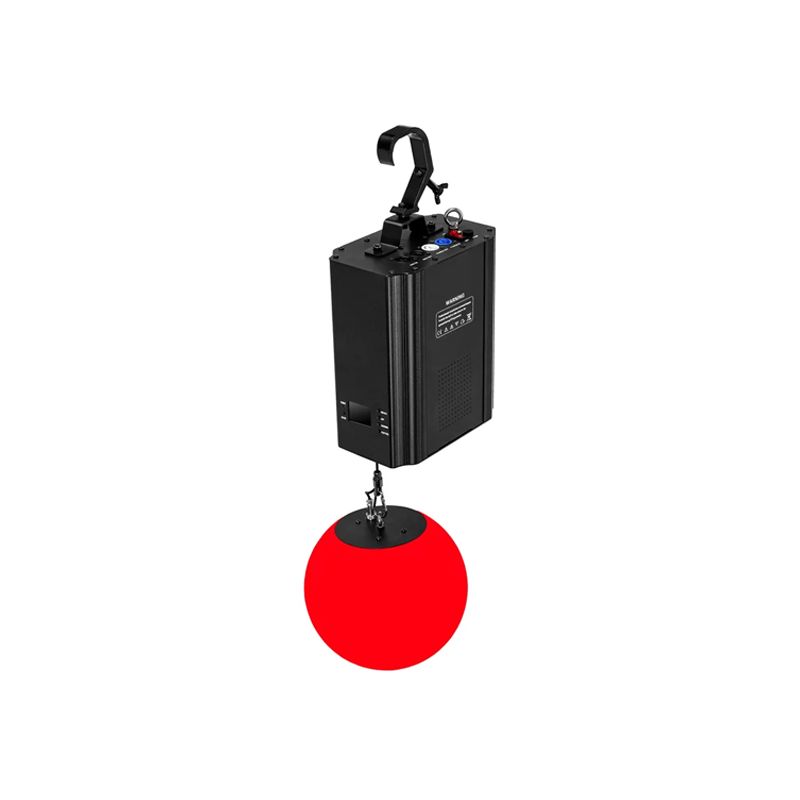
Different fixtures, different moods.
The Motors
This is where the magic happens—or doesn’t, if the quality is poor.
The motor lifts and lowers each fixture. Smooth motion is everything here. If it jerks or makes noise, the whole effect falls apart.
The Control System
Everything runs through DMX or Art-Net. That’s how you sync movement with light, and ultimately, with music or timing cues.
Done right, it feels intentional, almost like choreography.
Why More Venues Are Moving Toward Kinetic Lighting
It’s not just a trend. There’s a reason behind it.
It Adds Depth
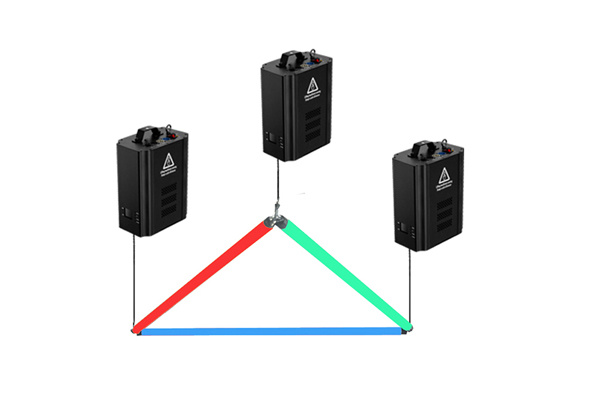
Traditional lighting works on a flat plane. Kinetic lighting introduces vertical movement, which instantly makes a space feel more dynamic.
It Feels High-End
You don’t need to explain it to the audience—they notice it immediately. The setup just looks more expensive, more considered.
It Adapts to Different Scenarios
One night, it’s a high-energy club. The next is a private event with a completely different tone. Same system, different programming.
Where It Makes the Biggest Impact
Not every space needs kinetic lighting. But in the right setting, it changes everything.
Nightclubs
Probably the most natural fit. Movement synced with music creates a much stronger connection with the crowd.
Concert Stages
Here, it’s often used at scale. Multiple fixtures moving together can define the entire visual identity of a show.
Brand Events
When attention matters, kinetic lighting does the job without overcomplicating the setup.
Weddings and Private Events
Less obvious—but very effective. With subtle movement, it adds elegance without being distracting.

Choosing the Right System (What You Should Actually Focus On)
This is where decisions start to matter.
Ceiling Height
Always start here. There’s no point choosing a system that doesn’t fit your space.
Motor Quality
It’s worth repeating: this is critical. Smooth, quiet, reliable motion is what makes the system feel professional.
Lighting Output
Brightness, beam sharpness, and color consistency—these all affect the final result more than you might expect.
Control Options
Basic setups work with DMX512. If you’re planning something more advanced, Art-Net gives you more flexibility.
Build Quality
These systems hang overhead. You want something solid, not something you’ll need to constantly fix.
Installation: What People Often Underestimate
Kinetic lighting isn’t difficult—but it’s not plug-and-play either.
You’ll need proper rigging. Load calculations. Safety measures. All the unglamorous but essential parts.
And then there’s programming.
Getting the most out of the system takes time. Or the right person. Either way, it’s an investment—not just in equipment, but in setup.
Common Pitfalls (And How to Avoid Them)
A few patterns show up again and again:
- Going for the cheapest option and sacrificing motor quality
- Ignoring the limitations of the venue
- Assuming programming will be quick and easy
- Overloading the structure without proper planning
None of these are complicated mistakes—but they’re costly.
So, Is It Worth It?
That depends on your goals.
If you just need basic lighting, this probably isn’t necessary. Traditional fixtures will do the job.
But if you’re trying to create something people remember—something that feels different the moment they walk in—then kinetic lighting starts to make a lot more sense.
It’s not just about visibility. It’s about experience.
Final Thoughts
Professional kinetic lighting sits in an interesting space. It’s part technology, part design tool.
It asks more from you—more planning, more setup, more attention to detail. But in return, it gives you something most lighting systems can’t: movement with purpose.
And that’s what people notice.
FAQs
Is professional kinetic lighting hard to use?
Not necessarily. Basic control is manageable, but advanced effects take time and experience.
How many fixtures do I need?
It varies. Even a small number can work, but larger setups create more impactful visuals.
Can it work in smaller venues?
Yes, as long as the system is scaled correctly and the lifting height fits the space.
What’s the most important component?
The motor. If the movement isn’t smooth, the entire effect suffers.
Do I need special software?
Not always. DMX consoles are enough for basic control, but software like Madrix helps with more complex programming.
Previous Page
More Cases


Online Message
Quick Links
Contact Information
Address: A8 Building Meiwang Industrial Park, Guangtang south street, Huadu District,Guangzhou, China.
Phone: +86 158 1889 3706
WhatsApp:+86 158 1889 3706