
Dance Floor for Sale: LED Dance Floor Buying Guide
Classification:
summary description]
When searching for a dance floor for sale, most buyers are looking for more than product photos. They want to know which type suits their venue, what the real cost will be, and whether the floor can handle regular use.
A nightclub, wedding venue, event rental company, and stage production company may all need an LED dance floor, but their requirements are not the same.
Price is only one part of the decision. Load capacity, surface material, LED technology, control system, installation, transportation, and spare parts can all affect the value of a floor.
This guide covers the main points to check before you buy.
What Is an LED Dance Floor?
An LED dance floor is a modular flooring system with LED lighting built into its panels. Depending on the model, it can display colors, patterns, chasing effects, and programmed animations.
Most commercial floors use individual panels that connect. This allows buyers to create different floor sizes without ordering a completely different system for every project.
Some models also support DMX512, allowing the floor to work with moving heads, wash lights, strobes, lasers, and other stage equipment.
Who Needs an LED Dance Floor?
The application should determine the product you choose.
Event rental companies need equipment that can be installed, transported, and stored repeatedly. Panel weight, connectors, flight cases, durability, and replacement parts all matter.
Nightclubs and bars usually place more demands on the equipment. Long operating hours make structural strength, surface durability, heat management, and maintenance important.
Wedding and event venues may focus more on appearance, floor size, easy operation, and compatibility with the venue's power supply.
Stage production companies often need DMX control and integration with other lighting fixtures.
There is no universal configuration that works equally well for every buyer.
How Much Does a Dance Floor Cost?
The price of a dance floor varies according to its size, LED technology, surface, controller, load capacity, accessories, and order quantity.
Public listings range from individual LED panels to complete commercial systems costing thousands of dollars.
When comparing suppliers, don't look at the panel price alone.
Ask whether the quotation includes:
- LED panels
- Controller
- Power supplies
- Cables
- Edge pieces
- Flight cases
- Spare parts
- Software
- Warranty
- Shipping
A cheaper quotation may cover fewer components. Make sure different suppliers are quoting comparable systems before making a decision.
How Do You Choose the Right Size?
Start by measuring the available floor area.
For portable systems, check more than the installation space. Doorways, elevators, storage rooms, and transport vehicles can all become limitations.
Also consider how many people are expected to use the floor and whether you need one fixed size or a modular configuration.
A modular system can be useful for rental companies because the same panels can be configured for different event sizes.
Check the Load Capacity
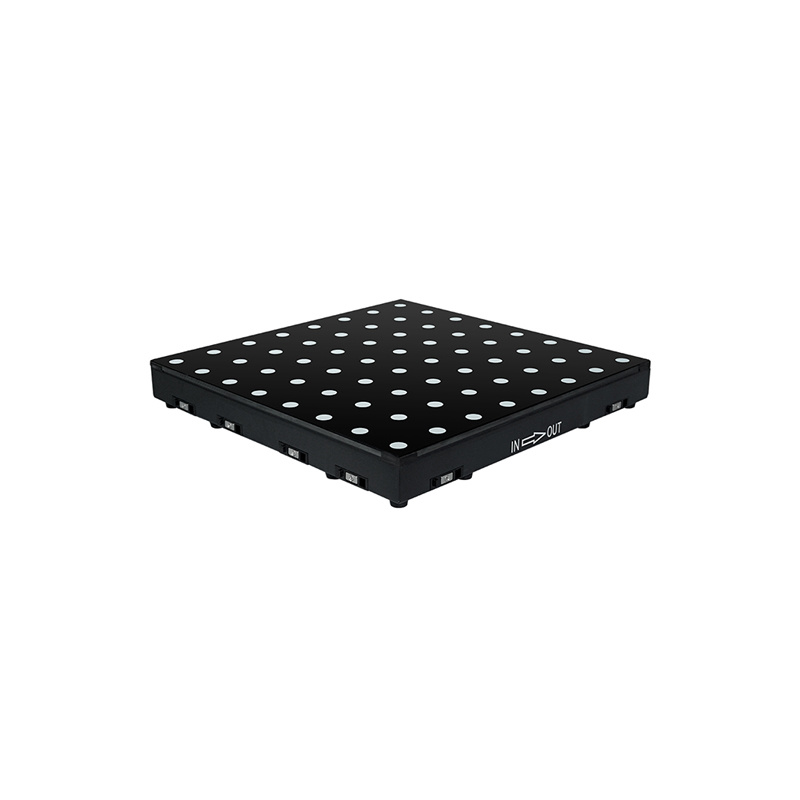
An LED dance floor is a walking surface, not just a lighting fixture. People will stand and dance on it, so the mechanical structure is important.
Before purchasing, ask about:
- Rated load capacity
- Frame construction
- Surface material
- Internal support structure
- Connection method
- Anti-slip treatment
- Edge protection
Do not assume two products with the same dimensions have the same structural performance.
A professional manufacturer should be able to provide a clear load rating and explain how the floor is constructed.
Which Surface Should You Choose?
Depending on the product, LED dance floors may use tempered glass, acrylic, or other protective materials.
The right choice depends on how the floor will be used.
For a wedding venue, appearance and light transmission may be important. For a rental company, scratch resistance, durability, and easy replacement can matter more.
Before ordering, ask whether the surface is anti-slip, how it should be cleaned, and whether damaged panels can be replaced individually.
Do You Need DMX Control?
For occasional private events, built-in programs or remote control may be enough.
For clubs, rental companies, and production environments, DMX can provide more control. It allows the dance floor to operate with other stage lighting from a compatible lighting console.
Before buying, check the actual DMX specifications, including controller type, channels, addressing, and connection method.
“DMX compatible” does not always mean that two products operate in the same way.
RGB, Pixel or Video Dance Floor?
The visual technology should match the application.
RGB LED floors are suitable for color changes, simple animations, chasing effects, weddings, parties, clubs, and general event use.
Pixel LED floors provide more control over individual areas, making them suitable for more detailed animated patterns.
Video dance floors are designed for more complex visual content and may be used for concerts, stage productions, and brand activations.
There is little reason to buy a video system if your project only requires basic lighting effects. More features also mean a more complex control system.
Can an LED Dance Floor Be Used Outdoors?
Only if the specific model is designed for outdoor use.
Check the actual IP rating and ask what parts of the system it covers. Outdoor applications may involve rain, humidity, dust, temperature changes, and uneven ground.
If you are planning an outdoor installation, tell the manufacturer before ordering. The required protection and construction may differ from an indoor model.
Portable or Fixed Installation?
A portable dance floor should be easy to assemble, transport, and store. Panel weight, connection design, cable management, and flight cases are important.
A fixed installation may place more emphasis on structural stability, long-term durability, appearance, cable routing, and maintenance access.
Tell the manufacturer how often the floor will be moved. This can affect which configuration makes sense.
How to Compare Dance Floor Suppliers
Before requesting quotations, prepare the same specifications for every supplier.
Include:
- Floor dimensions
- Indoor or outdoor application
- Portable or fixed installation
- Expected foot traffic
- LED type
- Control requirements
- Local voltage
- Shipping destination
- Required delivery date
- Customization requirements
Then ask each supplier for a complete quotation.
You should also ask about spare parts, warranty coverage, production lead time, technical support, and replacement procedures.
For commercial buyers, after-sales support can be just as important as the original product specification.
Common Buying Mistakes
Choosing Only by Price
A low purchase price does not necessarily mean a lower overall cost. Difficult installation, frequent repairs, or unavailable spare parts can create additional expenses.
Ignoring Load Capacity
The floor needs to support real people, not just LED equipment. Always confirm the manufacturer's rated load.
Buying More Technology Than Necessary
A video floor may look impressive, but an RGB system could be sufficient for a venue that only needs basic lighting effects.
Forgetting Transportation
Remember that the complete system may include panels, cases, controllers, power supplies, and cables. Check your storage and transport capacity before ordering.
Is Buying Better Than Renting?
That depends on how often the floor will be used.
For a one-time event, renting may be more practical. For a nightclub, wedding venue, event rental company, or production business with regular demand, purchasing may be worth considering.
Calculate more than the initial price. Include storage, transportation, installation labor, maintenance, spare parts, and expected equipment lifespan.
Final Thoughts
Finding a dance floor for sale is easy. Choosing the right one requires a closer look at how the equipment will actually be used.
Start with your application, then compare floor size, load capacity, surface, LED technology, control system, installation method, and included accessories.
Most importantly, compare complete quotations rather than headline prices.
A suitable dance floor should fit both your venue and your operating requirements. For commercial buyers, durability, repairability, spare parts, and manufacturer support can have a major impact on the long-term value of the equipment.
Frequently Asked Questions
What is the average price of a dance floor for sale?
There is no standard price. Cost depends on size, LED technology, surface, controller, load capacity, accessories, and order quantity. Complete commercial systems can cost thousands of dollars.
What size LED dance floor should I buy?
Measure the available space and consider the expected number of users. A modular system can be useful when the floor needs to accommodate different event sizes.
Are LED dance floors safe?
A professional floor should have a specified load capacity and a surface suitable for foot traffic. Always ask the manufacturer for the structural rating and surface specifications.
Can an LED dance floor work with DMX?
Many professional models support DMX, but specifications vary. Check the controller, channels, addressing, and connection method before purchasing.
Can I use an LED dance floor outdoors?
Only when the model is designed for outdoor conditions; check its IP rating and installation requirements with the manufacturer.
What should I ask an LED dance floor manufacturer?
Ask for complete specifications, load capacity, control method, warranty, spare-parts availability, production lead time, shipping terms, and a complete quotation.
Previous Page
Next Page
Previous Page
Next Page
More Cases


Online Message
Quick Links
Contact Information
Address: A8 Building Meiwang Industrial Park, Guangtang south street, Huadu District,Guangzhou, China.
Phone: +86 158 1889 3706
WhatsApp:+86 158 1889 3706