
Kinetic Light: Guide to Kinetic Lighting
Classification:
summary description]
A kinetic light does something a conventional stage fixture cannot do on its own: it moves through the space.
The fixture can rise, descend, stop at different heights, or work with other units to create changing patterns above a stage or dance floor. When movement is combined with color, dimming and programmed effects, the lighting installation becomes part of the visual performance.
For buyers, however, choosing kinetic lighting involves more than selecting a fixture that looks impressive. Ceiling height, lifting range, load capacity, control protocol, installation and maintenance all need to be considered.
This guide explains the main points to look at before choosing a kinetic light system.
What Is Kinetic Light?
Kinetic light is a lighting system that combines illumination with controlled mechanical movement.
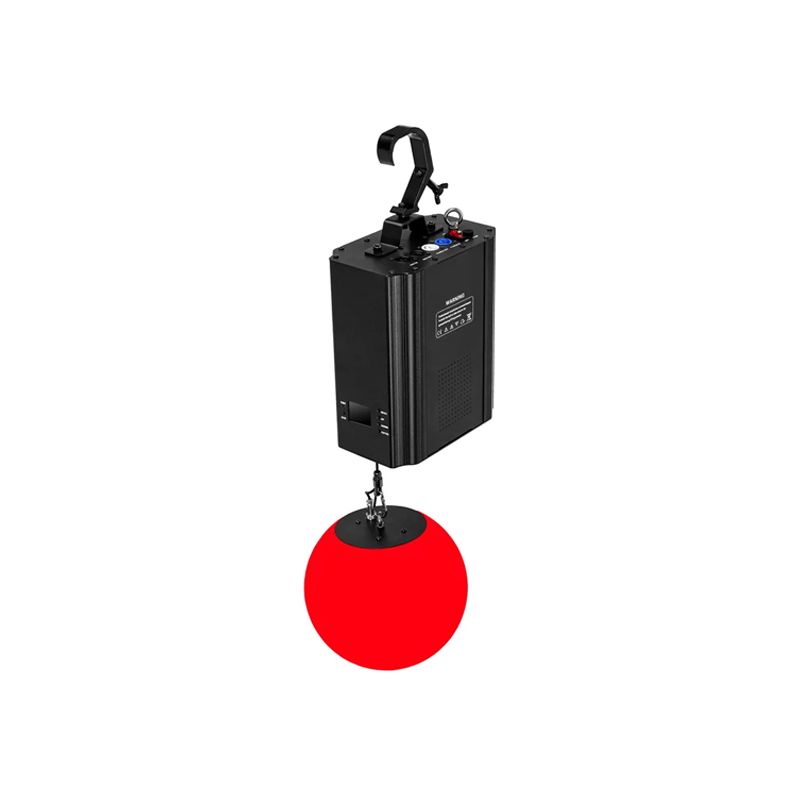
A typical system includes a motorized winch, suspended lighting fixture, power and signal connections, and a control system. The winch changes the height of the fixture, while the lighting controller manages functions such as color, brightness and effects.
For example, a group of kinetic balls can hang near the ceiling and then descend to different heights during a performance. Each fixture can be programmed individually or grouped with others.
This is the main difference between kinetic lighting and conventional stage lighting: the physical position of the light becomes part of the visual effect.
How Does Kinetic Lighting Work?
A motorized winch is installed above the operating area. A cable connects the winch to the suspended fixture. When a movement command is sent, the winch winds or releases the cable, changing the fixture’s position.
The lighting controller handles the visual effects.
Depending on the product, users may control:
- Fixture height
- Movement speed
- Color
- Brightness
- Strobe and pixel effects
- Movement sequences
DMX512 is widely used in professional lighting systems, while some products also support Art-Net.
The winch and fixture should be considered as one system. A good light source is not enough if the movement cannot be controlled accurately, and a precise winch cannot compensate for a fixture that does not provide the required lighting effects.
Types of Kinetic Light
Kinetic lighting can take several forms, depending on the project.
Kinetic Ball
Kinetic balls are suitable for ceiling installations where multiple fixtures need to create coordinated movement. They can be arranged in rows, circles or custom patterns.
They are commonly considered for nightclubs, concerts, event venues and permanent entertainment spaces.
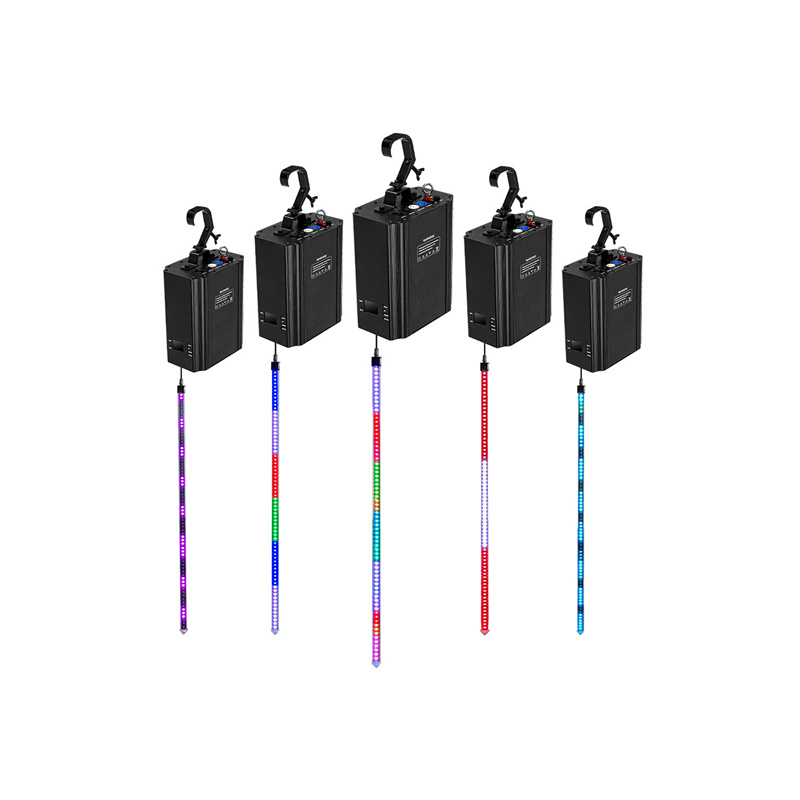
Kinetic Tube
The long vertical shape of a kinetic tube makes changes in height easy to see. Several tubes can form a moving curtain or three-dimensional wall of light.
Before choosing this type, make sure the venue has enough vertical clearance for both the fixture and its movement.
Kinetic Beam Ring
A kinetic beam ring combines a circular structure with directional lighting. The ring itself becomes part of the visual design while its height changes during the show.
It can work particularly well on concert stages and in venues that need a stronger visual effect.
Custom Kinetic Fixtures
Some projects use kinetic LED screens, panels or custom-designed structures. These applications require more attention to fixture weight, winch capacity, cable management and supporting structures.

Where Is Kinetic Light Used?
Kinetic lighting is used in several types of spaces, but the requirements can vary considerably.
Concerts: Fixtures can rise and descend in coordination with music and programmed lighting sequences.
Nightclubs: Kinetic balls, tubes and rings can turn an otherwise static ceiling into part of the lighting show.
Theaters: Movement can support scene changes and create different stage arrangements. Quiet operation and positioning accuracy may be more important than speed.
TV studios: Flicker performance, movement noise and control reliability deserve particular attention because of cameras and microphones.
Hotels and architectural spaces: Permanent kinetic installations can become part of the interior design and operate through scheduled programs.
How to Choose the Right Kinetic Light
1. Check the Ceiling Height
Do not use the floor-to-ceiling measurement as the actual lifting range.
Trusses, mounting hardware, fixture dimensions and safety clearance all take up space. Measure the available distance from the mounting point to the lowest intended operating position.
2. Calculate the Total Load
Look at the complete suspended assembly, not only the fixture weight.
The load may include the fixture, mounting hardware, cables and additional scenic elements. The winch should be selected according to its rated safe working load and the requirements of the installation.
For permanent systems, the supporting structure should also be reviewed by qualified professionals.
3. Define the Required Movement
Ask what the fixture actually needs to do.
Do you need simple up-and-down movement, different heights for each fixture, slow movement, fast transitions or precise positioning?
A nightclub and a theater may both use kinetic lighting but have very different movement requirements.
4. Check Control Compatibility
If the venue already uses DMX, ask the supplier for the DMX channel chart.
You should know how movement, dimming, color and effects are controlled and whether individual fixtures can be addressed separately.
For larger installations, DMX addressing should be planned before installation.
5. Consider Maintenance
Kinetic systems contain moving mechanical components. Motors, cables and connectors require inspection over time.
Ask the manufacturer how individual units are serviced and whether a faulty winch or fixture can be replaced without disturbing the rest of the installation.
This becomes particularly important for permanent installations.
How Much Does Kinetic Light Cost?
There is no standard price for a kinetic light.
The total cost depends on the fixture type, number of units, winch capacity, lifting range, control system, mounting hardware, customization, shipping and installation.
A small installation using lightweight fixtures can be very different from a large system with dozens of independently controlled units.
When requesting a quotation, provide the supplier with the quantity, fixture type, ceiling height, required lifting range, voltage, control protocol and destination.
You will receive a more useful quotation than if you simply ask, “How much is a kinetic light?”
Common Buying Mistakes
Choosing Only by Price
A cheaper winch may not provide the required load capacity, positioning accuracy or control functions. Compare the complete system rather than the unit price alone.
Ignoring the Supporting Structure
Kinetic fixtures are suspended above people. The mounting structure, rigging points and safety equipment need to be suitable for the complete installation.
Buying Without a Control Plan
A large installation can become difficult to program if DMX addressing and channel allocation are not planned.
Forgetting Maintenance
Consider how the system will be serviced several years after installation, not only how it looks on opening night.
Kinetic Light Safety
Safety should be considered before the visual design is finalized.
Important areas include safe working load, mounting structure, secondary safety measures, braking, overload protection, movement limits and regular inspection.
The exact requirements vary according to the country, venue and installation type. For permanent systems and large productions, qualified rigging and engineering professionals should be involved.
Frequently Asked Questions
What is kinetic light used for?
Kinetic light is used for concerts, nightclubs, theaters, TV studios, event venues, hotels and architectural installations where fixture movement is part of the visual design.
Does kinetic lighting use DMX?
Many professional systems use DMX512. Some also support Art-Net or other control methods. The available functions depend on the specific product.
Can kinetic lights move independently?
Yes. If the system supports individual addressing, fixtures can be controlled separately or grouped together for synchronized movement.
How high can a kinetic light be lifted?
There is no universal lifting height. It depends on the winch model and the requirements of the installation.
Are kinetic lights suitable for nightclubs?
Yes. Kinetic balls, tubes and rings can be used in nightclub ceilings, provided the ceiling height, load capacity and safety requirements are suitable.
Choosing a Kinetic Light Manufacturer
When comparing manufacturers, do not look only at product photos or unit prices.
A capable supplier should be able to discuss the fixture weight, lifting range, ceiling height, control system, installation environment and maintenance requirements.
Technical documentation is also important. Ask for product specifications, DMX channel charts, wiring information, installation drawings, warranty details and spare-parts support.
For custom projects, the manufacturer should be able to adjust the fixture or lifting system according to the actual application.
Final Thoughts
Kinetic light adds physical movement to stage and architectural lighting.
The right system depends on more than the appearance of the fixture. Before purchasing, consider the available height, suspended load, lifting range, movement requirements, control system, power and maintenance.
Then compare suppliers based on the complete solution rather than the price of one fixture.
When the mechanical system, lighting fixture and control system are planned together, kinetic lighting can become a practical part of the stage or interior design rather than simply another lighting effect.
Previous Page
More Cases


Online Message
Quick Links
Contact Information
Address: A8 Building Meiwang Industrial Park, Guangtang south street, Huadu District,Guangzhou, China.
Phone: +86 158 1889 3706
WhatsApp:+86 158 1889 3706