
Moving LED Lights: How to Choose the Right Fixture
Classification:
summary description]
Choosing the right stage light is not simply about buying the highest-wattage fixture.
A 200W moving head may be a better choice for one project, while another venue may need a wider beam, faster movement, or better color mixing. The right moving LED lights depend on the venue, lighting effect, control system, and type of event.
This guide covers the key points you should consider before buying.
What Are Moving LED Lights?
Moving LED lights are motorized stage fixtures that use LED light sources. The fixture head can move horizontally and vertically, allowing the light to change direction during a show.
The two basic movements are pan and tilt.
Most professional moving head LED lights also support DMX512. Through a lighting console, operators can control movement, brightness, colors, effects, and other functions.
That flexibility is the main reason they are widely used in concerts, nightclubs, theaters, DJ setups, weddings, and event productions.
Types of Moving LED Lights
Not every moving head is designed for the same purpose. The most common types are beam, spot, wash, and hybrid fixtures.
Moving Head Beam Lights
Beam moving heads produce a narrow, concentrated beam.
They are commonly used in nightclubs, concerts, EDM events, and DJ shows. With haze or fog, the beam becomes visible in the air and creates strong aerial effects.
If your priority is dynamic beams rather than general stage illumination, a beam fixture is a good option.
Moving Head Spot Lights
Spot moving heads provide more controlled projection. Depending on the model, they may include gobos, focus, zoom, and prism effects.
They work well when you need to highlight performers or project patterns onto the stage.
Moving Head Wash Lights
Wash fixtures spread light over a wider area.
They are useful for stage color, background illumination, theaters, concerts, and corporate events. If you want to cover a large stage evenly, a wash light is usually more suitable than a narrow beam fixture.
Hybrid Moving Head Lights
Hybrid fixtures combine functions such as beam, spot, and wash.
They can be useful for rental companies because one fixture can handle several types of events. But if you only need one specific function, a dedicated fixture may be more practical and cost-effective.
How to Choose Moving LED Lights
1. Consider the Venue
Start with the installation environment.
A small club with a low ceiling has very different requirements from a large concert stage where fixtures are mounted high above the performers.
For small venues, excessive output may not provide any real advantage. For large stages, throw distance and optical performance become much more important.

2. Check Beam Angle and Zoom
Beam angle determines how widely the light spreads.
A narrow beam works well for aerial effects, while a wider beam provides better stage coverage. If you need more flexibility, consider a moving LED stage light with motorized zoom.
A zoom allows the same fixture to produce different beam widths without physically moving the light.
3. Don’t Compare Wattage Alone
Wattage is only one specification.
LED efficiency, optics, lenses, cooling, beam angle, and drive design all affect the actual output. Two fixtures with similar wattage can produce noticeably different results.
When comparing professional products, ask the manufacturer for photometric data rather than relying only on rated power.
4. Look at Pan and Tilt
Movement range and movement speed are both important.
Fast movement is useful for concerts and clubs. Smooth, precise movement may be more valuable in theaters and other performance environments.
Check the actual pan and tilt range, speed, and movement control before buying.
5. Check the LED Color System
Common configurations include RGB, RGBW, RGBWA, and RGBWAUV.
RGBW adds a dedicated white LED, which can provide cleaner white output and better control of lighter colors. More advanced configurations offer additional color channels, but that does not automatically make a fixture better.
Choose the color system based on the lighting effect you actually need.
Is DMX Important?
For professional lighting systems, it usually is.
DMX512 allows multiple moving LED lights to be controlled from one lighting console. Depending on the fixture, you can control movement, dimming, color, strobe, gobo, zoom, focus, and other effects.
Before purchasing, ask for the DMX channel chart.
This is particularly important when adding new fixtures to an existing lighting system.
Can Moving LED Lights Be Used Outdoors?
Some can. Many cannot.
Check the fixture’s IP rating before using it outdoors. An indoor moving head should not simply be installed outside because its housing appears sealed.
For outdoor stages, festivals, and permanent outdoor installations, choose a fixture specifically designed for outdoor conditions. IP65-rated moving lights are available, but the manufacturer’s installation requirements should still be checked.
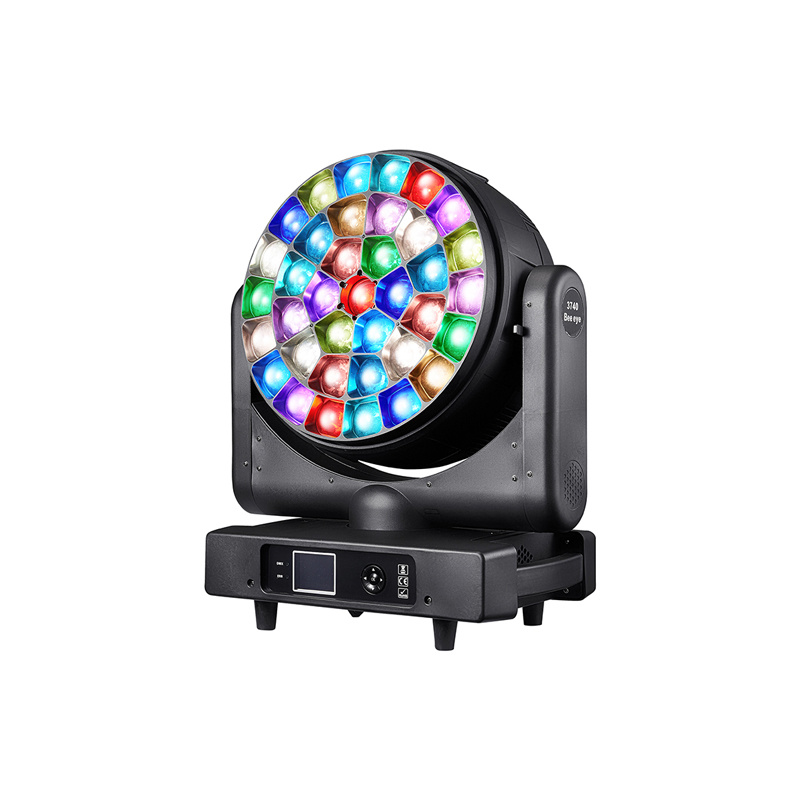
Choosing Moving LED Lights for Different Applications
Nightclubs and DJs
Movement speed, beam effects, strobe, color changes, and prism effects are often important.
Compact beam or hybrid moving heads are commonly suitable for this type of application.
Concerts
Large stages require more attention to output, throw distance, movement range, zoom, DMX control, and long-term reliability.
Weight also matters for touring productions because equipment needs to be transported repeatedly.
Theaters
Theater applications usually prioritize smooth movement, quiet operation, precise positioning, color quality, and optical control.
A fixture designed for loud clubs may not be the best option for a quiet theater.
Rental Companies
Versatility is important for rental businesses.
A fixture that works for concerts, weddings, clubs, corporate events, and small stages can be more useful than a highly specialized model. Also check spare parts availability, serviceability, warranty, and fixture weight.
What Should You Ask the Manufacturer?
Before placing a large order, ask for more than a product photo.
Important information includes:
- Full technical specifications
- LED source and power consumption
- Photometric data
- Beam angle or zoom range
- Pan and tilt specifications
- DMX channel chart
- IP rating
- Fixture weight
- Noise level
- Warranty terms
- Spare parts availability
An operating video can also be useful. It gives you a better idea of the actual movement, beam quality, color mixing, and effects.
For a large commercial order, requesting a sample before mass production is worth considering.
Frequently Asked Questions
Are moving LED lights good for stage lighting?
Yes. They are useful when you need changing light positions, dynamic effects, or flexible stage coverage. The best type depends on whether you need beam, spot, wash, or hybrid functions.
What is the difference between moving LED lights and moving head lights?
The terms often overlap. A moving head is a motorized lighting fixture, while moving LED lights specifically use LED light sources.
Can moving LED lights work with DMX?
Many professional models support DMX512. Always check the DMX channel chart and connector specifications before integrating a fixture into an existing system.
Which is better: beam, spot, or wash?
It depends on the application. Choose beam for narrow aerial effects, spot for controlled projection, and wash for broad stage illumination. Hybrid fixtures combine several functions.
Are moving LED lights suitable for outdoor use?
Only models designed for outdoor environments. Check the IP rating and manufacturer’s installation requirements before outdoor use.
Final Thoughts
The best moving LED lights are not necessarily the most powerful or the most expensive.
Start with the job the fixture needs to perform.
A nightclub may need fast-moving beams and strong effects. A theater may prioritize quiet and precise movement. A rental company may care more about versatility, durability, and easy maintenance.
Once you define the application, specifications such as output, beam angle, zoom, pan and tilt, color system, DMX control, IP rating, and serviceability become much easier to compare.
Don’t choose from the product photo alone. Ask for technical data, an operating video, the DMX chart, warranty details, and spare-parts information before making a commercial purchase.
Previous Page
Previous Page
More Cases


Online Message
Quick Links
Contact Information
Address: A8 Building Meiwang Industrial Park, Guangtang south street, Huadu District,Guangzhou, China.
Phone: +86 158 1889 3706
WhatsApp:+86 158 1889 3706