
Disco Dance Floor: Buying Guide for Events & Clubs
Classification:
summary description]
A disco dance floor can turn an ordinary dance area into part of the lighting show. LED floors are now widely used in nightclubs, weddings, DJ events, hotels, concerts, and private parties.
But appearance is only one part of the decision.
If you are buying a floor for regular use, you also need to consider its size, load capacity, control system, installation method, and long-term maintenance. A product that looks impressive in a photo may not be suitable for your venue.
This guide covers the main things to check before buying or renting a disco dance floor.
What Is a Disco Dance Floor?
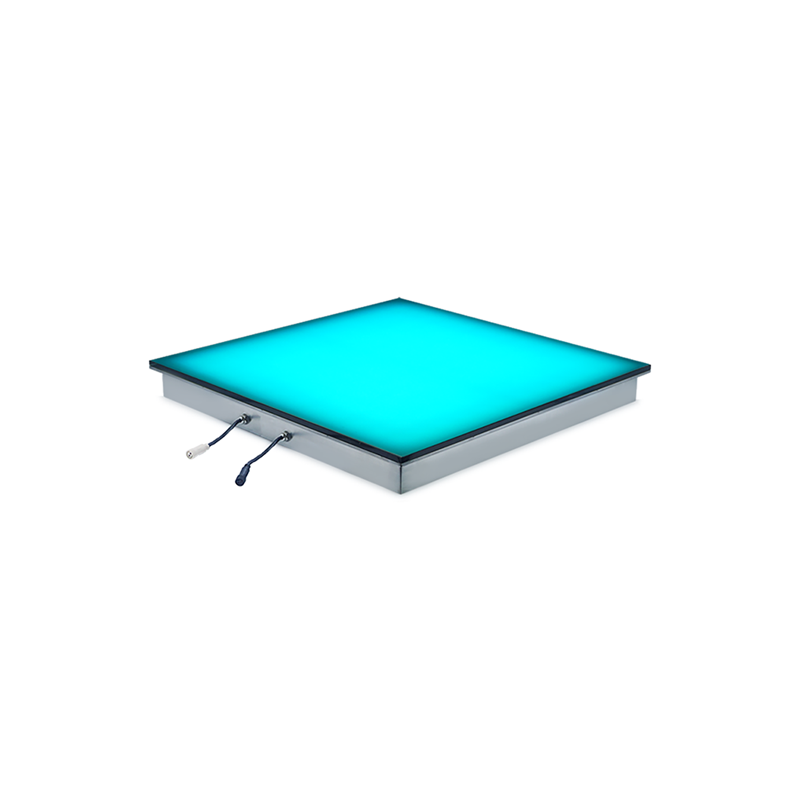
A disco dance floor is a flooring system designed for entertainment spaces, usually with integrated LED lighting.
Modern LED panels can display different colors, patterns, transitions, and animated effects. Depending on the model, they may support DMX control, sound activation, remote control, or built-in programs.
For a private party, simple automatic effects may be enough. A nightclub or production company may need DMX so the floor can work with moving heads, lasers, LED screens, and other stage lighting.
How Do You Choose the Right Size?
There is no standard size that works for every event.
Start with the number of people who are likely to dance at the same time. Some event planning guides use around 4.5 square feet, or approximately 0.42 m², per dancer as a starting point.
Treat this as a reference rather than a strict rule.
A wedding with 100 guests does not mean all 100 people will dance simultaneously. A nightclub may have a much higher concentration of people during peak hours.
Remember to leave space around the dance floor for walkways, furniture, equipment, and access.
Why Choose a Modular Floor?
Modular LED panels make it easier to create different floor sizes.
A rental company, for example, could use the same panels for a small wedding one week and a larger corporate event the next. This flexibility is one of the main advantages of modular LED dance floors.
Why Does DMX Control Matter?
DMX is useful when the dance floor needs to become part of a professional lighting system.
A DMX-compatible floor can be programmed alongside moving heads, beam lights, lasers, and other fixtures. You can coordinate colors and effects instead of operating the floor as a completely separate system.
For a simple event, DMX may not be necessary.
For nightclubs, stage productions, and rental companies, it can make a significant difference.
What Material Should a Disco Dance Floor Use?
Don’t judge a floor by its surface alone.
LED dance floors may use tempered glass, acrylic, polycarbonate, ABS, aluminum frames, or combinations of different materials.
When comparing products, check:
- Surface thickness
- Frame construction
- Panel connections
- Load capacity
- Surface grip
- Edge protection
- Electrical components
- Replacement parts
The construction becomes particularly important when the floor will be used every day or transported between venues.
How Much Weight Can It Support?
Always ask the manufacturer for the rated load capacity.
You should also find out whether the rating refers to static or dynamic loading. Several people standing still create a different situation from a group jumping in the same area.
Some commercial LED dance floors list load capacities around 500 kg/m², but specifications vary by product.
Do not assume that two panels with identical dimensions have the same structural strength.
If the floor is intended for a nightclub or rental business, request detailed technical specifications before placing an order.
Is an LED Dance Floor Safe?
Safety depends on both the product and installation.
The floor should have secure panel connections, appropriate load capacity, a stable surface, and suitable grip for the intended environment.
Before an event, inspect:
- Panel connections
- Damaged surfaces
- Uneven sections
- Exposed cables
- Floor edges
- Electrical connections
Liquids are another concern. Drinks should not be allowed to collect around electrical components.
If you plan to use the floor outdoors, check the actual IP rating. An LED product is not automatically waterproof.

How Is a Disco Dance Floor Installed?
Most modular floors follow a similar installation process:
1. Prepare the surface
Make sure the area is flat, stable, and clean.
2. Arrange the panels
Place the panels according to the required configuration.
3. Connect power and signal
Follow the manufacturer’s wiring diagram and keep cables organized.
4. Connect the controller
If the floor supports DMX, connect it to the lighting control system.
5. Test the entire floor
Check every panel, including corners and edges, before the event begins.
6. Secure the edges
Make sure the transition between the floor and surrounding surface does not create a trip hazard.
For rental companies, fast installation and easy transportation are especially important.
Should You Buy or Rent?
Buying usually makes more sense when the floor will be used frequently.
It can be a good option for:
- Nightclubs
- Permanent venues
- Event companies
- Rental businesses
- Regular entertainment events
Renting may be more practical when the floor is only needed occasionally, storage space is limited, or different sizes are required for different events.
For rental companies, don’t only compare purchase prices. Consider panel weight, setup time, transport, storage, and replacement parts.
A cheaper floor that takes twice as long to install may cost more in the long run.
How Much Does a Disco Dance Floor Cost?
The final price depends on the floor size, panel construction, LED configuration, controller, accessories, and order quantity.
Instead of comparing only the price of one panel, calculate the complete cost:
Floor + controller + accessories + shipping + installation + maintenance + spare parts
For B2B purchasing, give the supplier your required floor dimensions and application. A request such as:
“We need a 5 m × 4 m LED dance floor for a nightclub with DMX control.”
will usually produce a more useful quotation than simply asking for the unit price.

Common Problems to Watch For
The Floor Looks Better in Photos
Dark showroom photography can make LED effects appear stronger than they are in a real venue.
Ask for videos recorded under normal lighting conditions or request a sample when possible.
Replacement Parts Are Difficult to Find
LED floors contain electronic components that may eventually need replacement.
Ask whether individual panels, power supplies, cables, and other components are available separately.
The Floor Does Not Work With Your Lighting System
If your venue already uses DMX, check compatibility before purchasing. Otherwise, you may need additional control equipment.
The Floor Is Too Heavy
Weight matters much more for rental companies than permanent venues.
Heavy panels increase transportation, storage, loading, and installation costs.
How to Choose a Disco Dance Floor Supplier
Before placing a B2B order, ask for:
- Complete specifications
- Load capacity
- Surface material
- Control protocol
- Installation instructions
- Real product videos
- Warranty terms
- Spare parts availability
- Packaging details
- Shipping weight
- Technical support
Don’t focus only on visual effects.
A reliable supplier should be able to explain where the product can be used, how much weight it can support, how it is installed, and what happens if a panel fails.
FAQ
Can DMX control a disco dance floor?
Many professional LED dance floors support DMX, but not every model does. Check the exact specifications before buying.
Can I use a disco dance floor for a wedding?
Yes. LED dance floors are commonly used for weddings, private parties, corporate events, clubs, and other entertainment applications.
Are LED dance floors waterproof?
Not necessarily. Check the product’s IP rating and manufacturer’s installation requirements before using one outdoors.
Can individual LED panels be replaced?
Many modular systems allow individual panels or components to be replaced. Confirm spare-part availability before purchasing.
What size disco dance floor do I need?
Estimate the number of people likely to dance at the same time, then consider the available space, walkways, furniture, and stage position.
Final Thoughts
The best disco dance floor is not always the brightest or cheapest one.
The right choice depends on how you intend to use it.
A nightclub may prioritize durability and DMX control. A rental company may care more about weight, installation speed, and spare parts. A wedding planner may put more emphasis on appearance and easy setup.
Before buying, check the construction, load rating, control system, installation method, replacement parts, and total ownership cost.
Once these points are clear, you can choose a disco dance floor that looks good on the night and continues to perform long after the first event.
Previous Page
Previous Page
More Cases


Online Message
Quick Links
Contact Information
Address: A8 Building Meiwang Industrial Park, Guangtang south street, Huadu District,Guangzhou, China.
Phone: +86 158 1889 3706
WhatsApp:+86 158 1889 3706