
Kinetic Balls for Stage Lighting: Complete Buyer’s Guide
Classification:
summary description]
Step into a modern nightclub, large concert, or upscale wedding, and you’ll likely observe moving lights drifting above the crowd. They sometimes ascend gently like waves or plunge abruptly with the music’s beat. These are kinetic balls—one of the fastest-growing visual effects in stage lighting.
Unlike conventional fixtures anchored in place, kinetic balls unite motion and illumination. This results in a more immersive atmosphere. Audiences no longer simply see light—they experience movement, depth, rhythm, and ambiance simultaneously.
Over the last few years, kinetic lighting has become increasingly popular in clubs, live events, TV studios, and commercial installations. As interest grows, buyers searching for “kinetic balls” usually have the same questions: How do kinetic balls actually work?
- Are they difficult to install?
- How many units are needed?
- What makes one system better than another?
- Are they worth the investment?
This guide answers those questions in a practical way, especially for venue owners, lighting designers, rental companies, and event organizers looking for reliable solutions.
Understanding Kinetic Balls
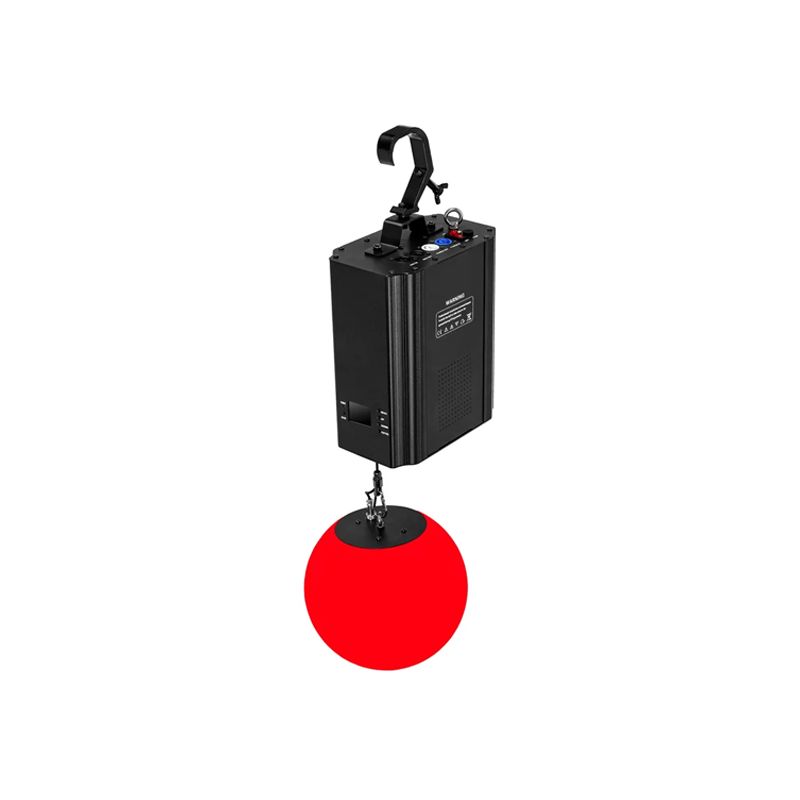
A kinetic ball works as a motorized LED sphere attached to a DMX-controlled winch system. The winch raises or lowers the ball using steel cables, while the built-in LED provides coordinated lighting effects. Motors move each ball in set patterns based on programmable instructions.
While the setup may appear simple, it functions through coordinated control of motors, cables, winches, LED spheres, and software to deliver synchronized visual effects.
A typical setup includes:
- LED lighting balls
- DMX lifting winches
- Steel suspension cables
- Control software
- Signal and power distribution
Once programmed, every ball can move independently or as part of a larger synchronized animation.
Some venues install only a handful of units for decorative ceiling effects. Others use hundreds of kinetic balls to build massive moving light shows above the audience.
The flexibility is one reason why the technology has become so attractive.
Why So Many Venues Are Switching to Kinetic Lighting
Traditional lighting still matters, of course. Spotlights, wash lights, and beam fixtures remain essential for stage productions. But static lighting can only go so far.
Kinetic systems add something different: motion.
Movement transforms the entire visual experience, making lighting more immersive and impactful.
In clubs, floating light spheres create a futuristic atmosphere that instantly makes the venue feel more premium. During concerts, synchronized lighting effects help build emotional moments that standard lighting simply cannot reproduce.
Even relatively simple motion sequences can dramatically increase audience engagement.
Kinetic balls have also surged in popularity due to social media. Guests instinctively capture dynamic lighting displays. Videos featuring moving ceiling installations generate more online attention, indirectly promoting venues.
For many businesses, the lighting system becomes part of the brand identity.
How Kinetic Ball Systems Actually Work
Many users researching these systems seek clarity on their complexity. The answer varies based on the scale of the project.
At a basic level, the process is fairly straightforward.
The control console or software sends DMX signals to each winch, instructing the motors to move the balls vertically. The LEDs in the spheres receive commands for color and effects. Through these signals, movements and lighting synchronize to pre-set scenes.
Some setups focus mainly on smooth movement patterns. Others use advanced pixel mapping and music synchronization to create more complex visual choreography.
Popular control platforms include:
- Madrix
- MA Lighting
- Resolume
- Avolites
- Sunlite
Experienced lighting programmers can create extremely detailed motion effects, but even beginners can build attractive scenes with modern software.
This accessibility is why kinetic lighting is now expanding beyond large concert productions and into smaller venues.

Where Are Kinetic Balls Commonly Used?
Kinetic balls are no longer limited to large-scale music festivals. Today, they appear in many different commercial environments.
Nightclubs and DJ Venues
This remains the most common application. Ceiling-mounted kinetic balls help clubs create immersive dance floor environments without requiring permanent stage redesigns.
Some venues use warm ambient movement during lounge hours, then switch to aggressive synchronized effects at night.
Concert Stages
Concert productions often blend kinetic balls with beam lights, lasers, and LED screens. The moving spheres add dimension to large stages and enhance empty vertical space.
Wedding Installations
Luxury weddings increasingly use kinetic lighting for entrances, dance performances, and banquet hall decoration. Soft motion combined with warm lighting creates a more elegant atmosphere compared to traditional truss lighting alone.
Exhibition Spaces and Art Installations
Museums and commercial exhibitions also use kinetic systems because the movement naturally attracts attention. Visitors tend to spend more time interacting with dynamic visual installations.
How Many Kinetic Balls Do You Need?
The number of kinetic balls needed depends on the size of the venue and the desired visual effect.
A small club may require only 10 to 20 units for noticeable ceiling movement. Larger entertainment venues frequently install 50 or more.
Concert productions can use hundreds.
What matters most is spacing and programming — not simply quantity.
Too many fixtures packed together can actually reduce visual clarity. In many cases, a carefully programmed medium-sized installation looks better than an oversized setup with poor choreography.
For first-time buyers, starting with a scalable system helps ensure flexible growth as needs change.

Things Buyers Often Overlook
Many buyers emphasize price comparisons when evaluating suppliers. This is understandable, but several other factors matter more over time.
Motor Stability
A cheap winch may work initially, but develop positioning problems after long-term use. Smooth lifting accuracy is critical for professional results.
Noise Level
Some low-quality motors produce noticeable mechanical noise, especially in quieter venues like theaters or luxury event spaces.
Software Compatibility
Not every system integrates smoothly with professional lighting software. Before purchasing, users should confirm compatibility with their preferred control platform.
Safety Systems
Reliable kinetic systems should include:
- Stable rigging structures
- Overload protection
- Emergency stop functionality
- Durable steel cables
- Consistent motor calibration
Safety becomes especially important for permanent installations above public areas.
Is Installation Difficult?
Installation is manageable for experienced lighting technicians. However, large projects require proper planning to ensure safety and reliability.
The process usually includes:
- Installing truss or ceiling rigging
- Securing the winches
- Connecting power and DMX signal lines
- Assigning addresses
- Programming motion scenes
- Testing safety functions
Smaller systems can sometimes be installed within a day. Larger venues may require several days, depending on ceiling height and fixture quantity.
One thing many buyers underestimate is cable management. Clean wiring is essential for both reliability and visual appearance.
Common Problems With Kinetic Ball Systems
Like any stage technology, kinetic lighting systems can experience issues if poorly configured.
The most common problems include:
- Unstable DMX communication
- Incorrect addressing
- Uneven movement
- Cable twisting
- Software synchronization delays
In many cases, these problems stem from installation mistakes or poor programming rather than issues with the fixtures themselves.
That’s why technical support from the manufacturer matters more than many buyers realize.
Choosing the Right Kinetic Ball Supplier
There are now many kinetic lighting manufacturers in the market, but product quality varies significantly.
A reliable supplier should offer:
- Stable motor systems
- Long-term technical support
- Spare parts availability
- Software guidance
- Product testing before shipment
- Custom project solutions
Buyers should also ask practical questions before ordering:
- What is the average motor lifespan?
- Are the systems tested continuously before delivery?
- How quickly are spare parts available?
- Does the supplier provide installation assistance?
These details become extremely important once the project is operating commercially.
FAQ About Kinetic Balls
Are kinetic balls suitable for small venues?
Yes. Even a compact setup can create a strong visual impact if programmed correctly.
Can kinetic balls synchronize with music?
Absolutely. Most professional systems support music synchronization through DMX software and timecode programming.
What lifting height is recommended?
Most installations use lifting ranges between 3 and 9 meters, though larger custom systems can go higher.
Do kinetic balls require professional programming?
Basic scenes are relatively easy to create. More advanced motion choreography may require experienced lighting programmers.
Are kinetic ball systems expensive?
Costs vary depending on:
- Quantity
- Winch specifications
- LED quality
- Control system
- Customization requirements
For commercial venues, many operators see the investment as worthwhile because the visual effect significantly improves audience experience.
How long do kinetic winches last?
High-quality systems can operate reliably for many years with proper maintenance and regular inspections.
Final Thoughts
Kinetic balls have changed the way modern venues approach lighting design. Instead of treating lighting as static, designers can now create environments that feel alive and constantly moving.
Previous Page
More Cases


Online Message
Quick Links
Contact Information
Address: A8 Building Meiwang Industrial Park, Guangtang south street, Huadu District,Guangzhou, China.
Phone: +86 158 1889 3706
WhatsApp:+86 158 1889 3706