
Stage Lighting Spotlights: Buyer’s Guide for Professional Use
Classification:
summary description]
When people search for stage lighting spotlights, they’re usually not looking for theory.
They’re trying to solve a problem.
Maybe the stage looks flat.
Maybe performers aren’t visible enough.
Or maybe the lighting just doesn’t feel “professional,” even though the equipment list looks fine on paper.
This article is written for those situations. Not for manufacturers. Not for catalogs. For users who actually need their lighting to work.
What Exactly Are Stage Lighting Spotlights?
In simple terms, stage lighting spotlights are fixtures designed to direct attention.
Unlike wash lights, which spread light evenly across a wide area, spotlights do the opposite. They focus. They isolate. They tell the audience where to look.
That could mean:
- A singer during a chorus
- A speaker on a podium
- A key moment in a performance
If your audience knows where to look without thinking, the spotlight is doing its job.
Why Spotlights Make or Break a Stage Setup
This is something many users only realize after a few shows.
Without proper spotlights:
- Performers blend into the background
- Camera footage looks dull or inconsistent
- Even expensive stages can feel surprisingly low-end
Good spotlighting adds contrast.
Contrast creates depth.
And depth is what separates professional stages from basic setups.
It’s not about having more lights. It’s about using the right ones.
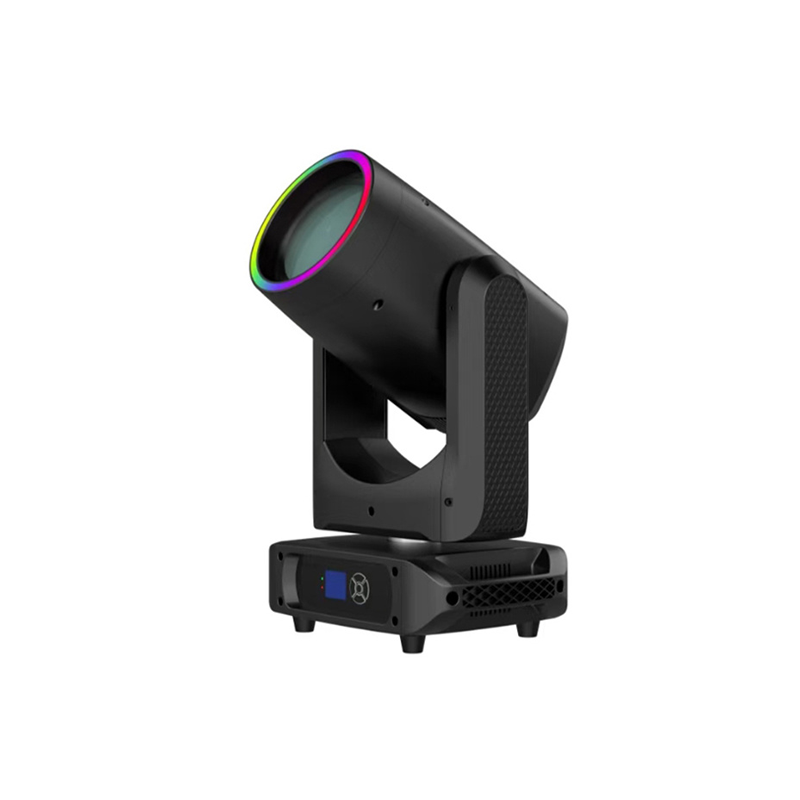
Common Types of Stage Lighting Spotlights
LED Stage Lighting Spotlights
LED spotlights are now the default choice for most venues. Not because they’re trendy, but because they solve real problems.
They run cooler.
They consume less power.
And they last far longer than traditional lamps.
For venues that operate several nights a week, this matters more than most people expect.
Moving Head Spotlights
If movement is part of your show, static spotlights will feel limiting very quickly.
Moving head spotlights allow you to:
- Change focus during a performance
- Create dynamic transitions
- Adjust coverage without repositioning fixtures
They’re common in concerts and festivals, but smaller venues use them too—just in a more controlled way.
Profile (Ellipsoidal) Spotlights
Profile spotlights are about precision.
They let you shape the beam, cut edges cleanly, and control spill light. That’s why theaters and corporate stages rely on them so heavily.
When lighting needs to look intentional rather than decorative, profile spotlights usually enter the conversation.
How to Choose the Right Stage Lighting Spotlight
This is where most buyers feel overwhelmed. Specs are everywhere, but clarity is not.
Here’s how to think about it from a practical point of view.
Start With Your Venue, Not the Product
A small indoor stage does not need a high-wattage concert spotlight.
And a large venue will never be satisfied with underpowered fixtures.
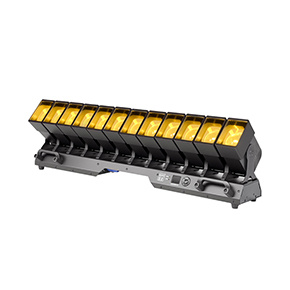
Consider:
- Stage size
- Ceiling height
- Throw distance
Once those are clear, half of the options disappear naturally.
Beam Angle Matters More Than Wattage
Many users fixate on wattage. That’s understandable—but misleading.
A lower-wattage spotlight with the right beam angle can outperform a more powerful fixture used incorrectly.
If flexibility matters, look for spotlights with adjustable zoom. They adapt as your stage setup changes.
Control Compatibility Is Not Optional
If you plan to use a lighting console, automation, or time-coded shows, DMX512 support is essential.
Mixing incompatible fixtures leads to:
- Limited programming options
- Complicated workarounds
- Frustration during live operation
This is one of those things that’s easy to overlook—and hard to fix later.
Mistakes Users Commonly Regret
These come up again and again:
- Choosing based on price alone
- Ignoring dimming smoothness
- Mixing different spotlight models without testing
- Assuming “all LEDs look the same.”
They don’t. And the differences show clearly once the lights are on.
Are Stage Lighting Spotlights Worth It for Small Venues?
Yes—if chosen correctly.
Modern stage lighting spotlights come in compact, efficient designs that work perfectly in bars, churches, studios, and multipurpose halls.
The key isn’t scale.
It’s proportion.
A well-matched spotlight setup will always look better than oversized fixtures used improperly.
Previous Page
Previous Page
More Cases


Online Message
Quick Links
Contact Information
Address: A8 Building Meiwang Industrial Park, Guangtang south street, Huadu District,Guangzhou, China.
Phone: +86 159 7549 0982
WhatsApp:+86 158 1889 3706