
LED Dance Floor Buying Guide: Price, Size & Features
Classification:
summary description]
An LED dance floor can turn an ordinary event space into part of the show.
It is used in nightclubs, weddings, concerts, hotels, corporate events, and rental productions. Depending on the model, the floor can display colors, patterns, animations, logos, or video content.
But choosing an LED dance floor is not simply a matter of finding the brightest product or the lowest price.
Load capacity, surface material, pixel pitch, refresh rate, control system, installation method, and operating environment all matter. The right combination depends on how and where the floor will be used.
What Is an LED Dance Floor?
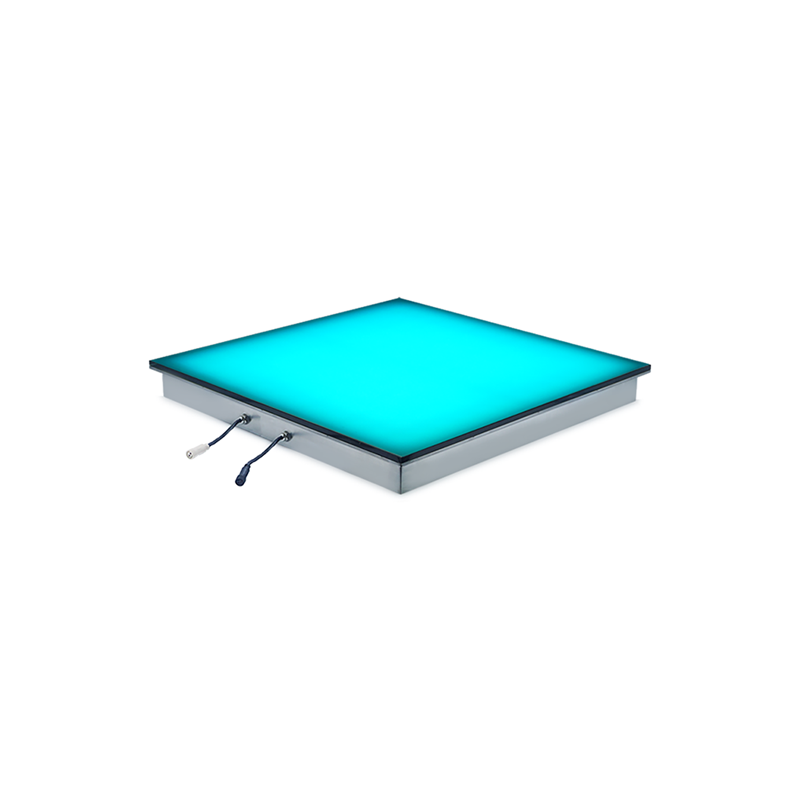
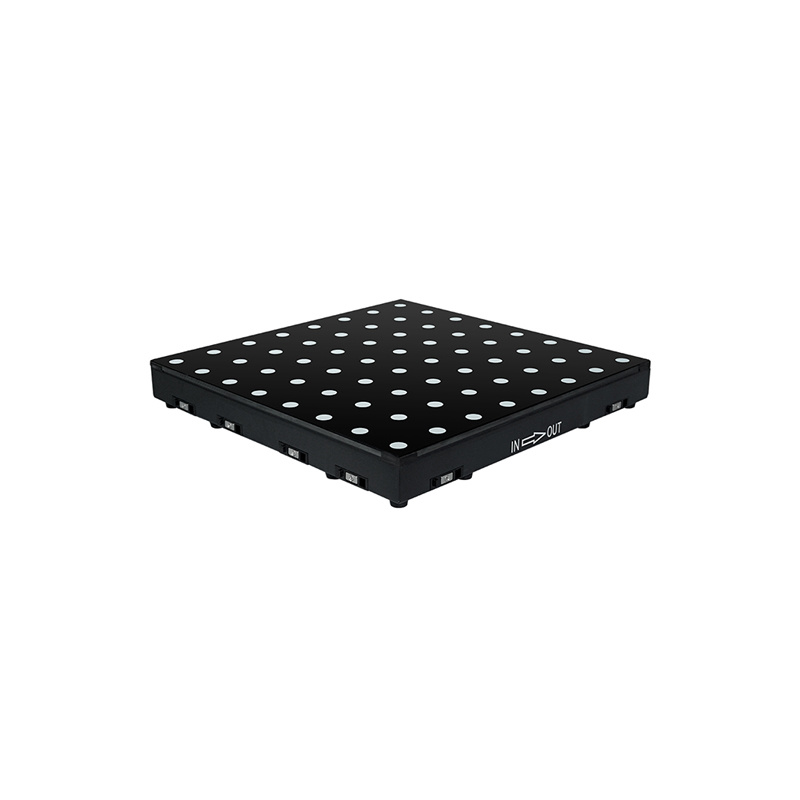
An LED dance floor is a modular flooring system with LED lighting built into each panel. Multiple panels are connected to create a larger walking surface.
Some systems are designed mainly for lighting effects, while others can display detailed graphics or video. This distinction is important because a lighting-effect floor does not necessarily have the resolution or control capability of a video display.
The mechanical structure matters just as much as the LEDs.
People will walk and dance on the floor, so the panels need appropriate structural support and a surface designed for foot traffic.
A professional system may include:
- LED floor panels
- Protective surface
- Supporting frame
- Power supplies
- Signal cables
- Controller
- Edge ramps
Some models also support DMX512 or Art-Net, allowing the floor to work with moving heads, strobes, PAR lights, lasers, and other stage equipment.
Where Are LED Dance Floors Used?
Weddings
Wedding floors often focus on appearance and atmosphere rather than complex video playback.
RGB effects, white lighting, animated patterns, and simple color changes are common. Setup time is also important because the floor may need to be installed and removed within the same day.
Nightclubs
Nightclubs place greater demands on durability.
The floor may operate for hours at a time and needs to work alongside the venue’s existing lighting. DMX control is useful because the operator can program the dance floor together with moving heads, strobes, and other fixtures.
Concerts and Stage Shows
On a concert stage, an LED dance floor can become part of the overall visual design.
If the event will be filmed or livestreamed, refresh rate deserves attention. A floor can look stable to the audience while producing flicker or scanning lines on camera.
Always ask for actual camera footage if video production is part of the project.
Event Rental
Rental companies have another set of priorities.
Panels will be transported, installed, removed, and packed repeatedly. Weight, connectors, flight cases, setup time, surface durability, and spare parts can therefore have a major impact on operating costs.
The cheapest panel is not always the cheapest system to run.
How to Choose an LED Dance Floor
Start with the application.
Ask yourself:
- Where will it be installed?
- Is it temporary or permanent?
- How many people will use it?
- Does it need video?
- Will it be filmed?
- Does it need DMX or Art-Net?
- Will it be transported frequently?
- Will it be used indoors or outdoors?
These questions will narrow the choices before you start comparing prices.
1. Check Load Capacity
This should be one of the first specifications you check.
People do not distribute their weight evenly. A group dancing in one area can create a much higher localized load, while high heels can place considerable pressure on a small point.
Ask the manufacturer for:
- Maximum load
- Recommended working load
- Load per panel or square meter
- Surface construction
- Supporting frame material
Avoid relying on vague descriptions such as “heavy duty.” A measurable load rating is much more useful.
2. Check the Surface Material
The walking surface affects both safety and service life.
Manufacturers may use tempered glass, acrylic, polycarbonate, or other reinforced materials. Each has different characteristics in terms of impact resistance, weight, scratch resistance, slip resistance, and light transmission.
For rental applications, ask what happens if the surface is damaged.
Can it be replaced separately? Are spare panels available?
These details can become important after dozens of events.
3. Consider Pixel Pitch and Resolution
Not every LED dance floor needs high resolution.
If you mainly want color changes and simple animations, a lower pixel density may be enough.
If you need logos, text, detailed graphics, or video, resolution becomes more important.
Pixel pitch describes the distance between pixels. A smaller pitch generally provides more image detail, but it also increases cost.
Choose the resolution based on the actual viewing distance and content instead of automatically choosing the smallest pixel pitch.
4. Check Refresh Rate for Camera Use
If the floor will appear in professional photos, livestreams, or event videos, refresh rate matters.
A display can look normal in person but produce flicker or rolling lines on camera.
Ask the supplier for real operating footage and, if possible, test the floor with the camera equipment you plan to use.
5. Check the IP Rating for Outdoor Use
Indoor and outdoor LED dance floors should not be treated as the same product.
If the floor will be used outdoors, check the actual IP rating and clarify which parts of the system it covers.
Also consider rain, humidity, dust, temperature changes, direct sunlight, cable protection, and the stability of the installation surface.
An IP rating alone does not make an indoor floor suitable for outdoor events.
How Large Should an LED Dance Floor Be?
Bigger is not always better.
A wedding with 200 guests does not mean all 200 people need to dance at the same time. A nightclub, however, may need a much larger active area.
Before ordering, consider:
- Available venue space
- Expected number of active users
- Stage and seating layout
- Emergency exits
- Panel dimensions
- Power and cable routes
Most LED dance floors are modular, so the final size depends on the panel dimensions and the number of panels.
Ask the supplier to provide the exact panel size, number of panels, final floor dimensions, total weight, and power requirements.
How Much Does an LED Dance Floor Cost?
There is no standard price.
The cost can change according to:
- Pixel pitch
- Panel size
- LED type
- Surface material
- Load capacity
- IP rating
- Control system
- Interactive functions
- Quantity
- Flight cases
- Spare parts
Two suppliers may quote very different prices for products that look similar.
One quotation may include controllers, cables, edge ramps, flight cases, and spare modules. Another may cover the panels only.
For a fair comparison, request a complete configuration or bill of materials.

LED Dance Floor Rental or Purchase?
Renting is usually practical for occasional events.
Buying may make more sense if you operate a nightclub, event company, rental business, or permanent entertainment venue.
For rental companies, calculate more than the purchase price.
Consider:
Purchase cost + transportation + storage + installation labor + maintenance + replacement parts
A slightly more expensive floor may produce a lower total cost if it is easier to transport, faster to install, and more reliable over repeated events.
What Control System Does an LED Dance Floor Use?
DMX512
DMX512 is useful when the floor needs to work with a professional lighting console. It allows the operator to control the floor alongside moving heads, strobes, PAR lights, and other fixtures.
Art-Net
Art-Net can be useful for larger systems or installations that require network-based control.
Standalone or Sound Activation
Basic systems may use preset programs or react to music. This can be enough for private parties, bars, and smaller entertainment applications.
Always confirm the exact protocol before buying. Compatibility should not be assumed.
Installation and Maintenance
An LED dance floor needs a stable, reasonably level base.
Panels should connect securely and sit at the correct height. Uneven panels can create a trip hazard and make the finished installation look poor.
The basic installation process normally includes:
- Preparing the floor
- Positioning the supporting structure
- Connecting panels
- Connecting power and signal
- Testing the system
- Installing edge protection
Cable routing also matters. A loose cable across a walkway can quickly become a safety issue.
After an event, inspect the panels, connectors, cables, and surface. Clean the equipment according to the manufacturer’s instructions and store the panels in suitable protective cases.
For rental companies, keeping a simple record of damaged or replaced panels can help identify recurring problems.
Questions to Ask the Supplier
Before ordering, ask:
- What is the panel size and weight?
- What is the maximum load?
- What surface material is used?
- What is the pixel pitch?
- What is the refresh rate?
- Does it support DMX512 or Art-Net?
- Is it suitable for outdoor use?
- What is the IP rating?
- What accessories are included?
- Are edge ramps included?
- Are spare modules available?
- What is the warranty?
- Can you provide wiring diagrams and technical documentation?
A clear answer to these questions is more useful than a low price alone.
Common Buying Mistakes
Choosing Only by Price
A low quotation may exclude controllers, cables, ramps, flight cases, or spare parts.
Compare the complete system.
Using a Normal LED Screen as a Floor
A conventional LED display is not automatically designed to carry people. Floor applications require appropriate structural support and surface protection.
Buying Too Much Resolution
If the floor only needs basic colors and patterns, very fine pixel pitch may not provide enough additional value to justify the cost.
Ignoring Transportation
For rental companies, panel weight and packing volume affect every event. Ask about flight cases, stacking, handling, and total packed weight before purchasing.
Frequently Asked Questions
Can people dance on an LED dance floor?
Yes, provided the floor is specifically designed for foot traffic and has an appropriate load rating. A normal LED display should not be used as a walking surface.
Can an LED dance floor display video?
Some models can. Others are designed mainly for RGB colors and lighting effects. Check the pixel pitch, resolution, refresh rate, and controller before buying.
Can an LED dance floor work with DMX?
Many professional models support DMX512, but not all do. Confirm the control protocol with the manufacturer.
Can LED dance floors be used outdoors?
Some are designed for outdoor use. Check the IP rating and complete environmental specifications before installation.
Should I buy or rent an LED dance floor?
Renting is usually better for occasional events. Buying becomes more attractive when the floor will be used frequently, rented to customers, or installed permanently.
Conclusion
The best LED dance floor is not necessarily the one with the highest resolution or the lowest price.
Start with the application.
A wedding may prioritize appearance and quick installation. A nightclub needs durability and lighting-system integration. A rental company needs equipment that can survive repeated transportation and setup. A concert may require better resolution and camera performance.
Once the application is clear, compare the specifications that actually affect your project: load capacity, surface construction, pixel pitch, refresh rate, IP rating, control options, installation requirements, and after-sales support.
Most importantly, compare complete configurations rather than panel prices alone. That is usually the easiest way to avoid unexpected costs after the equipment arrives.
Previous Page
Previous Page
More Cases


Online Message
Quick Links
Contact Information
Address: A8 Building Meiwang Industrial Park, Guangtang south street, Huadu District,Guangzhou, China.
Phone: +86 158 1889 3706
WhatsApp:+86 158 1889 3706