
Moving Head Beam 230: Complete Buying Guide
Classification:
summary description]
If you’re looking for a moving head beam 230, chances are you already have a project in mind. Maybe you’re fitting out a nightclub. Maybe you need a few fixtures for a rental inventory. Or perhaps you’re replacing older 7R beam lights and want something with similar performance.
Whatever the reason, the basic requirement is usually the same: a tight, bright beam that can move quickly, cut through haze, and create those aerial effects that are difficult to achieve with a conventional wash light.
The problem starts when you compare suppliers.
Almost every product page will tell you that its 230W beam is powerful, reliable, and professional. Those descriptions don’t tell you much. A 230W fixture from one manufacturer can behave quite differently from another.
The lamp is only part of the story.
This guide looks at the specifications that actually matter, what you can expect from a 230W moving head beam, and what to check before buying a single fixture—or several dozen.
What Is a Moving Head Beam 230?
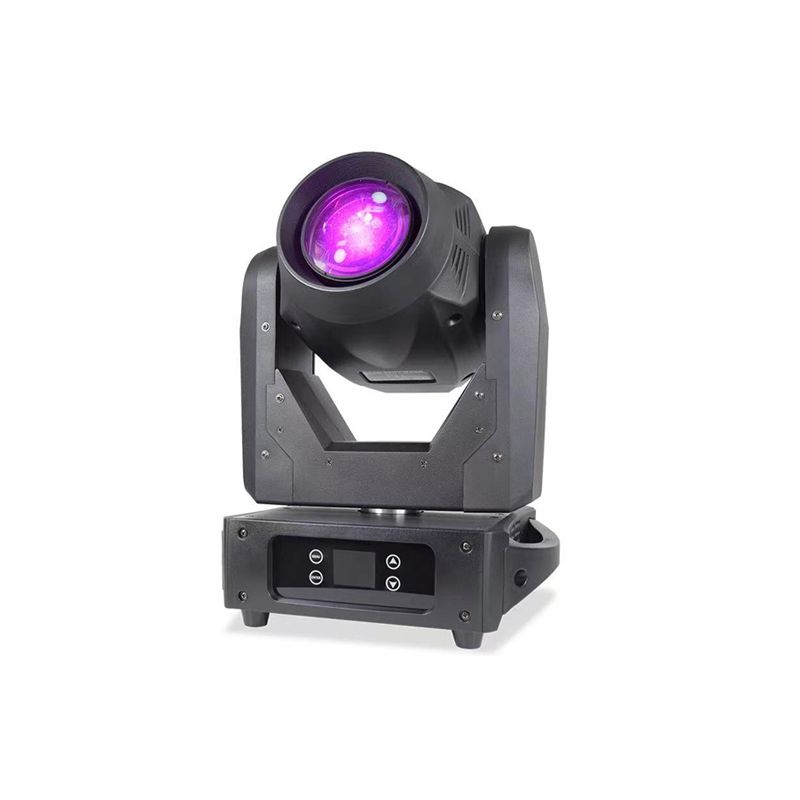
A moving head beam 230 is a moving-head lighting fixture designed to produce a narrow, concentrated beam. The “230” normally refers to the nominal power of the discharge lamp used by the fixture.
Many traditional models use a 230W 7R-type lamp, which is why you’ll often see these products listed under several different names:
- 230W moving head beam
- 230W beam moving head
- 7R moving head
- 230W 7R beam
- 7R beam moving head
- Sharpy-style beam
These terms are related, but they don’t necessarily describe identical fixtures.
A typical 230W beam combines a discharge lamp with an optical system, motorized pan and tilt, color effects, gobos, prism, focus, strobe, dimming, and DMX control. Some fixtures offer more functions than others.
The result is a light designed less for illuminating a person and more for creating a visible beam in the air.
That’s an important distinction.
If you need to cover an entire stage with an even layer of color, a wash light will usually make more sense. If you want narrow shafts sweeping across the room, the beam fixture is the better tool.
Why Do People Still Buy 230W Beam Lights?
The 230W beam has been around for a while, but it hasn’t disappeared.
There is a simple reason for that.
It sits in a useful middle ground between output, size, cost, and portability. A small nightclub may not need a large 400W beam fixture. A rental company may also prefer a fixture that is familiar to technicians and easy to move from one event to another.
For many applications, 230W is enough.
You will commonly find this type of fixture in:
- Nightclubs
- DJ venues
- Concert stages
- Wedding productions
- Rental companies
- Touring shows
- Event venues
- Theaters
- Corporate events
- Entertainment installations
The effect becomes much more dramatic when haze is present. Without haze or another atmospheric medium, the beam itself is harder to see as it travels through the room.
That doesn’t mean the light won’t work without haze. It simply means you’re not getting the full visual effect the fixture was designed to create.
What Does a 230W Moving Head Beam Look Like?
Think of a narrow shaft of light rather than a broad pool of illumination.
When several fixtures are installed together, the effect becomes much more interesting. One beam can sweep across the audience. Four beams can form a fan. Six or eight can be programmed into crossing patterns, radial effects, or synchronized movements.
This is where the moving-head mechanism becomes important.
A beam fixture is not just about how bright the lamp is. The movement, speed, positioning accuracy, and optical system all contribute to the final look.
Many traditional 230W models have a beam angle in the neighborhood of 0–3.8°, although the actual specification varies between products. Some models also include fixed gobos, color wheels, rotating prisms, and motorized focus.
So when you’re comparing two “230W” fixtures, don’t stop at the wattage.
Look at the optics.
230W Beam vs. Moving Head Wash
This is one of the first decisions you should make.
A beam and a wash may both have pan-and-tilt movement, but they serve very different purposes.
| Feature | 230W Beam | Moving Head Wash |
| Main purpose | Aerial effects | Stage illumination |
| Beam | Narrow | Wide |
| Typical visual effect | Sharp light shafts | Broad color coverage |
| Gobo use | Common | Less important |
| Prism | Often included | Model dependent |
| Best for | Clubs, concerts, effects | Stages, performers, walls |
If your goal is to illuminate a singer or a large section of the stage, don’t expect a beam light to do the job of a wash.
It isn’t designed for that.
On the other hand, if you want beams moving through haze while the music changes, a wash isn’t going to give you the same look.
In many professional setups, both types are used together. The wash handles coverage. The beam creates movement and depth.
The Specifications That Matter When Buying a Moving Head Beam 230
A product page can contain a long list of numbers. Some are useful. Some matter far less than buyers think.
Here are the ones worth paying attention to.
1. Lamp and Light Source
The traditional 230W beam platform is often associated with 7R discharge lamps. Different manufacturers may use different lamp brands or models, so check the exact specification rather than assuming every 230W fixture uses the same source.

Ask the supplier about:
- Lamp model
- Lamp manufacturer
- Rated lamp life
- Replacement price
- Lamp availability
- Ballast
- Warranty
Lamp life can vary. Some 230W fixtures specify around 2,000 hours, while others list figures closer to 3,000 hours.
And don’t forget the replacement cost.
For a rental company running dozens of fixtures, the lamp is an operating expense, not just a line on a specification sheet.
2. Beam Angle
Beam angle has a direct effect on what you see.
A very narrow beam produces a sharper, more concentrated shaft. A wider beam covers more area but changes the character of the effect.
Some traditional 230W models specify around 0–3.8°, but you should always check the manufacturer’s actual optical specification.
There is another point that is easy to miss.
Two fixtures can have a similar beam angle and still produce noticeably different results because the lens, lamp alignment, reflector, and optical design are different.
If possible, ask for a real operating video.
Even better, test the fixtures side by side.
3. Pan and Tilt
Most 230W moving head beams provide a wide range of movement. Around 540° pan and 250°–270° tilt is common on traditional models.
The numbers don’t tell the whole story, though.
A fixture with fast pan and tilt but poor positioning accuracy can be frustrating to program. The movement may overshoot, reset poorly, or look uneven at slow speeds.
For a nightclub, noise can also be an issue.
The motors and cooling fans are both worth considering if the fixture will be installed close to the audience.
4. DMX Control
DMX512 is standard territory for professional stage lighting, and many 230W beam fixtures provide several DMX channel modes.
You might see 16-channel, 20-channel, or other configurations depending on the product.
Before buying, check:
- DMX channel modes
- 3-pin or 5-pin connectors
- DMX input and output
- Enslaver/enslaved person operation
- Auto programs
- Sound-active mode
- RDM support
If you’re adding the fixtures to an existing lighting system, compatibility matters more than having the longest feature list.
What Effects Can a 230W Beam Produce?
The exact effects depend on the fixture, but a traditional 230W beam often includes several optical systems.
Color Wheel
A color wheel allows the beam to change color during a programmed sequence.
Some models offer around 14 colors plus open, although configurations vary.
For a club, rapid color changes can work well with music. For a concert, you may use fewer colors and rely more on movement and beam positioning.
Gobo Wheel
Gobos give the beam a pattern rather than leaving it as a plain shaft of light.
A common configuration on 230W beam fixtures is a fixed gobo wheel with multiple patterns.
Gobos aren’t always the main attraction. In many lighting programs, they’re used selectively while movement, prism, color, and strobe do most of the visual work.
Prism
The prism is one of the more recognizable effects.
Instead of producing a single beam, it splits the light into several rays. When the prism rotates, the resulting pattern becomes much more dynamic.
Different fixtures use different prism configurations, so check the specification if this effect is important to your project.
Focus
Motorized focus helps keep gobos and beam effects defined at different distances.
This becomes particularly useful when the same fixture is used on different trusses or moved between venues.
Strobe and Dimming
A variable strobe is useful for fast effects, while smooth dimming allows more controlled transitions.
These functions may seem basic, but they’re used frequently in programmed shows.

Is a Moving Head Beam 230 Good for Nightclubs?
For many nightclubs, yes.
In fact, the narrow beam is one of the reasons this type of fixture works so well in that environment.
Add haze. Put several fixtures around the room or on the truss. Then program different pan and tilt positions.
The beams can sweep over the dance floor, cross above the audience, or move in time with the music.
But there is one thing nightclub buyers sometimes overlook: noise.
A fixture with loud fans or noisy movement may be acceptable in a large concert hall. It can be much more noticeable in a smaller club.
If you’re buying for permanent installation, ask the supplier about fan noise and motor noise before ordering a large quantity.
Is 230W Enough for a Concert?
It can be.
For small and medium-sized stages, a 230W beam can provide a useful aerial effect, particularly when haze is used, and the fixtures are positioned at suitable angles.
The number of fixtures you need depends on the setup.
A few units may be enough for a simple symmetrical design. Larger stages can require considerably more.
Don’t calculate the quantity from stage width alone. Consider the throw distance, mounting height, ambient light, haze level, fixture position, and the visual density you want.
A beam mounted at the back of a large stage has a very different job from one mounted above a small club floor.
Can a 230W Beam Be Used Outdoors?
Check the IP rating before you do anything else.
A lot of traditional 230W beam fixtures are IP20 products intended for indoor environments. They are not designed to sit in direct rain.
If you need outdoor lighting, ask about:
- IP rating
- Rain protection
- Operating temperature
- Humidity
- Housing protection
- Outdoor installation requirements
Don’t assume that putting an indoor fixture under a temporary cover makes it an outdoor fixture.
For outdoor touring or permanent outdoor installations, choose a model designed for those conditions from the beginning.
How Much Electricity Does a 230W Beam Use?
This catches some buyers by surprise.
“230W” generally refers to the lamp power, not necessarily the total electrical consumption of the fixture.
A 230W lamp still needs a ballast, fans, motors, control electronics, and other components. As a result, total power consumption can be higher than 230W.
For example, some 230W moving head beam specifications list total power consumption around 350W.
This matters when you’re planning a large installation.
If you have 20 fixtures, the difference between lamp wattage and actual fixture consumption becomes significant.
Use the manufacturer’s rated power consumption when calculating electrical loads, generator capacity, distribution, and cable requirements.
230W Beam vs. 260W or 400W Beam
More wattage sounds better on paper.
It isn’t always the right answer.
A 230W beam may be a better fit when:
- The venue is small or medium-sized.
- Budget is limited
- Fixture weight matters
- You need the traditional 7R-style beam effect.
- Throw distances are moderate.
- You already have compatible lamps and spare parts.
A higher-output fixture starts to make more sense when:
- The throw distance is long.
- Ambient light is strong.
- The stage is large
- You need more output.
- The lighting system is designed around a newer lamp platform.
Don’t compare fixtures by wattage alone.
Optical efficiency matters. So does lens quality, lamp alignment, reflector design, beam uniformity, and the way the fixture is calibrated.
A well-designed 230W beam can outperform a poorly designed fixture with a higher nominal lamp power.
What Is the Difference Between 230W Beam and Sharpy?
You’ll often see “Sharpy” used when people are searching for narrow-beam moving heads.
The term comes from a well-known beam fixture, but suppliers sometimes use “Sharpy” or “Sharpy-style” to describe products with a similar narrow-beam concept.
That doesn’t mean the products are technically identical.
If you’re comparing a so-called Sharpy beam with a 230W moving head beam, look at the actual specifications:
- Lamp
- Beam angle
- Output
- Optical system
- Color wheel
- Gobo system
- Prism
- Movement
- DMX
- Power consumption
The name is useful for finding the category. It isn’t enough for making a purchasing decision.
What Spare Parts Should You Ask About?
This question is often ignored until something breaks.
For professional use, find out whether the manufacturer can supply replacements:
- Lamps
- Ballasts
- Fans
- Main boards
- Motor boards
- Power supplies
- Gobos
- Optical parts
- Display boards
- Cables
You don’t necessarily need every spare part in your warehouse.
You do need to know whether they can be obtained when a fixture is out of service.
For a rental company, this can make a real difference. One failed fixture is inconvenient. Ten failed fixtures during a busy event season is a much bigger problem.
Maintaining a 230W Moving Head Beam
Discharge-lamp fixtures generate heat and move a lot of air through their cooling system. Dust eventually gets inside.
Regular cleaning is therefore part of normal operation.
Pay attention to:
- Air vents
- Cooling fans
- Lenses
- Optical components
- DMX connectors
- Power cables
- Mounting hardware
- Unusual motor noise
- Lamp condition
Keep the fixture dry during storage and transportation.
When servicing a hot discharge lamp, allow it to cool first and follow the manufacturer’s maintenance procedure.
For rental companies, keeping a simple service record is useful. If a fan starts becoming noisy or a fixture begins taking longer to strike, you can catch the problem before the next event.
Questions to Ask Before Buying a 230W Beam
If you’re contacting several manufacturers, don’t just send:
“Please send me your best price for a 230W beam.”
You’ll get a lot of price lists.
Instead, ask specific questions:
What lamp does the fixture use?
What is the actual beam angle?
What is the total power consumption?
What DMX modes are available?
What is the lamp life?
What is the fixture’s weight?
Is it suitable for continuous nightclub operation?
Can you provide a real test video?
What spare parts are available?
What is the warranty period?
These questions make supplier comparisons much easier.
More importantly, they shift the conversation away from price alone.
Moving Head Beam 230: Is It the Right Choice for You?
A 230W moving head beam makes sense when the main requirement is a concentrated, moving beam rather than broad stage coverage.
It’s a practical option for nightclubs, small and medium-sized concerts, event productions, rental companies, and indoor entertainment venues.
But don’t choose one simply because the product description says “230W.”
Look at the optical system. Check the beam angle. Ask about the lamp. Test the movement. Find out the real power consumption. If you’re buying in quantity, investigate spare parts and after-sales support before placing the order.
Those details don’t look exciting on a product page.
They matter a lot after the fixtures arrive.
Frequently Asked Questions
What is a moving head beam 230?
A moving head beam 230 is a motorized stage light that typically uses a 230W discharge lamp to create a narrow, concentrated beam. Most models also provide functions such as color, gobo, prism, focus, strobe, dimming, and DMX control.
Is a 230W beam the same as a 7R beam?
Not necessarily. The terms are often used together because many traditional 230W beam fixtures use a 7R-type lamp. Always check the actual lamp and optical specifications.
What beam angle does a 230W moving head have?
The exact angle depends on the optical system. Traditional models may offer a very narrow beam around 0–3.8°, while other fixtures use different designs.
Does a 230W beam need haze?
No. It can operate without haze. However, haze makes the beam visible through the air and can make the aerial effect much more obvious.
Can DMX control a 230W moving head beam?
Yes. DMX512 is commonly supported. Depending on the fixture, you may find different channel modes and additional control options.
How many 230W beam lights do I need?
There isn’t a fixed number. Stage size, throw distance, mounting position, ambient light, haze, and the desired visual effect all influence the quantity.
Is a 230W beam suitable for a nightclub?
Yes. Its narrow beam and fast movement make it well suited to nightclub environments. Noise level, cooling, lamp life, and long-term reliability should also be considered for permanent installations.
Can a 230W beam be used outdoors?
Only when the fixture has an appropriate outdoor IP rating; many traditional 230W beam fixtures are designed for indoor use and should not be exposed to rain.
Is a 400W beam always better than a 230W beam?
No. Higher lamp power can provide more output, but optical efficiency and fixture design also matter. The right choice depends on venue size, throw distance, ambient light, budget, and the required effect.
Final Takeaway
If your goal is to create narrow moving beams across a stage, dance floor, or event space, the moving head beam 230 remains a practical fixture to consider.
Its strength is not simply the 230W lamp.
The real performance comes from the combination of lamp, optics, movement system, effects, cooling, control electronics, and mechanical construction. That’s why two fixtures with the same lamp rating can produce different results.
For buyers, the safest approach is straightforward: define where the fixtures will be used, determine the required beam angle and throw distance, compare the complete specifications, and test the actual product before committing to a large order.
The lowest price is rarely the only number worth comparing.
Previous Page
More Cases


Online Message
Quick Links
Contact Information
Address: A8 Building Meiwang Industrial Park, Guangtang south street, Huadu District,Guangzhou, China.
Phone: +86 158 1889 3706
WhatsApp:+86 158 1889 3706