
Kinetic Lights Price List 2026: Costs, Budget & Buying Guide
Classification:
summary description]
If you’re looking for a kinetic lights price list, you’ve likely run into confusing results.
Quotes can vary widely—some as low as $180 per unit, others as high as $600. Some suppliers ask for project details before quoting a price.
So what’s the real cost of kinetic lighting?
The truth is that there isn’t a single price list that applies to every project. A nightclub installing 30 kinetic balls has completely different requirements from a concert organizer running a touring production. Even two venues of the same size can end up with very different budgets.
Before comparing quotations, it’s important to understand what you’re actually paying for.
Why Kinetic Light Prices Vary More Than Most Buyers Expect
A common mistake is assuming that kinetic lighting works like conventional stage lighting.
With a standard moving head light, you purchase the fixture, hang it on a truss, and connect power and signal cables.
Kinetic lighting is different.
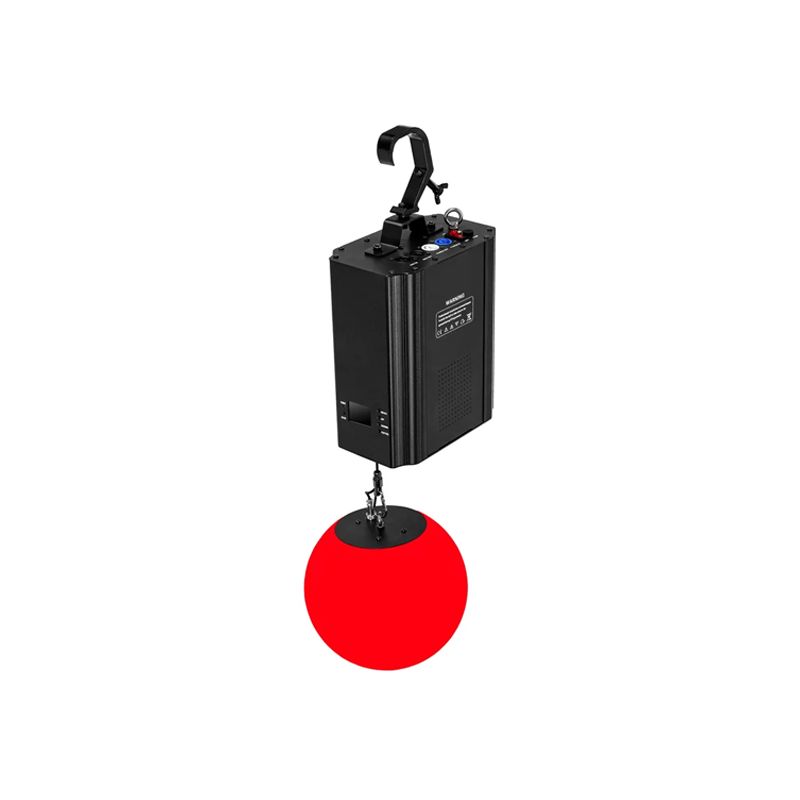
Each fixture is part of a lifting system. You’re not only buying the light itself. You’re also paying for the winch, the lifting mechanism, positioning accuracy, control compatibility, and long-term reliability.
This is why two products that look almost identical in photos can have very different prices.
Some suppliers reduce costs by using lower-grade motors or simplified control boards. The system may work during initial testing, but after months of continuous operation, positioning errors, cable issues, or excessive motor noise can start to appear.
For venues operating several nights a week, these details matter far more than saving a few dollars on the initial purchase.

Typical Kinetic Lights Price List
Although every project is different, buyers often ask for a rough budget range before discussing technical details.
Based on current market conditions, the following estimates can serve as a starting point.
These figures should be viewed as reference points rather than fixed prices.
In practice, the final quotation often depends on customization requirements, quantity, and installation conditions.
How Much Budget Should You Prepare?
This is usually the first question venue owners ask.
The answer depends less on the product and more on the visual effect you’re trying to create.
For example, a small lounge bar might only need twelve kinetic balls suspended above the VIP area. In many cases, the total investment stays below $8,000.
A nightclub, however, often aims to create a centerpiece that becomes part of its identity. Here, it’s common to see 30, 50, or even 100 fixtures synchronized with music and video content. Budgets quickly move into the $20,000-$50,000 range.
Large-scale productions are a different category altogether.
Concert tours and television studios frequently combine kinetic beams, LED balls, pixel tubes, and custom shapes into a single installation. These projects can easily exceed six figures, particularly when advanced programming and redundant control systems are required.
The Hidden Costs That Rarely Appear on Price Lists
One lesson many buyers learn after receiving quotations is that the fixture price is only part of the story.
Shipping is often underestimated.
A quotation may seem competitive until freight charges are added, especially for international projects involving dozens of winches and fixtures.
Installation is another factor.
If the venue ceiling exceeds 8 meters or requires custom rigging structures, labor costs can increase significantly.
Programming is frequently overlooked as well.
Creating the kind of kinetic effects seen in promotional videos doesn’t happen automatically. Someone needs to design, test, and synchronize those movements. For complex projects, programming costs can represent a noticeable portion of the overall budget.
Ignoring these factors can lead to unpleasant surprises later in the project.

What Experienced Buyers Look at Besides Price
After working with enough suppliers, most buyers stop asking one question:
“Who has the cheapest kinetic lights?”
Instead, they start asking better questions.
- How accurate is the positioning system?
- How many hours has the winch been tested?
- What happens if a motor fails?
- Are spare parts available locally?
- Does the supplier provide programming support?
These questions often reveal more about the true value of a system than the price itself.
A kinetic lighting installation is usually expected to operate for years. Choosing solely on the lowest quotation can become expensive if reliability issues appear later.
Final Thoughts
Searching for a kinetic lights price list is a sensible place to start, but pricing alone rarely tells the full story.
The most successful projects begin with a clear understanding of the venue, the desired visual impact, and the long-term operating requirements. Once those factors are defined, comparing quotations becomes much easier.
Rather than looking for the cheapest option, focus on finding a system that balances performance, reliability, technical support, and overall project goals.
Key takeaways: Don't focus only on initial price. Understand your specific venue and needs. Compare value—including reliability, support, and project fit—not just cost. This approach leads to better long-term ROI in kinetic lighting projects.
Previous Page
Previous Page
More Cases


Online Message
Quick Links
Contact Information
Address: A8 Building Meiwang Industrial Park, Guangtang south street, Huadu District,Guangzhou, China.
Phone: +86 158 1889 3706
WhatsApp:+86 158 1889 3706