
What Are Beam Lights? Features, Applications and Buying Tips
Classification:
summary description]
If you've ever attended a concert, music festival, nightclub event, or large-scale stage production, chances are you've noticed powerful beams of light shooting across the venue and cutting through the air. Beam lights usually create those dramatic lighting effects.
For venue owners, event planners, rental companies, and lighting designers, beam lights have become one of the most important fixtures in modern lighting systems. They create energy, movement, and visual excitement in ways that traditional lighting simply cannot match.
But choosing the right beam light isn't always straightforward. There are countless models available, different light sources, various beam angles, and a wide range of prices. Understanding what actually matters can save both time and money.
This guide explains how beam lights work, where they are most effective, and what you should consider before investing in them.
What Are Beam Lights?
A beam light is a lighting fixture designed to project a very narrow and concentrated beam of light over long distances.
Unlike wash lights, which spread light over a large area, beam lights focus most of their output into a tight shaft. This concentrated output creates the striking aerial effects often seen in concerts and nightclubs.
The reason beam lights appear so bright is not always because they generate more light. Instead, they focus the available light into a much smaller area, making the beam look more intense and visible.
In venues that use haze or fog effects, beam lights become even more impressive because the light path itself becomes visible to the audience.
Why Have Beam Lights Become So Popular?
The entertainment industry has changed significantly over the last decade. Audiences expect immersive experiences rather than simple stage illumination.
Lighting is no longer just about helping people see performers. It has become part of the show.
Beam lights help create:
- Dynamic stage movement
- High-energy concert effects
- Dramatic entrances
- Immersive nightclub atmospheres
- Eye-catching festival productions
- Memorable wedding and corporate event experiences
A well-programmed beam light show can completely transform a venue, even without expensive stage decorations or LED screens.
How Do Beam Lights Work?
Although beam lights may look complex from the outside, their basic operating principle is relatively simple.
A powerful light source generates light, while precision optics focus that light into an extremely narrow beam.
Several components work together to achieve this effect:
Light Source
Modern beam lights typically use one of two technologies:
LED Beam Lights
LED technology has become increasingly popular because it offers:
- Lower power consumption
- Longer operational life
- Reduced maintenance
- Lower heat generation
- Faster color transitions
Many medium-sized venues now prefer LED beam fixtures because of their long-term operating efficiency.
Lamp-Based Beam Lights
Traditional discharge-lamp beam fixtures remain popular for large-scale productions.
Their advantages include:
- Exceptional brightness
- Long projection distances
- Powerful aerial effects
These fixtures are commonly used in festivals, stadiums, and major touring productions where maximum output is required.
Optical System
The optical design is often more important than the fixture's wattage.
A well-designed optical system can produce a cleaner, sharper beam and achieve better performance than a higher-powered fixture with lower-quality optics.
This is one reason experienced lighting professionals rarely evaluate beam lights based solely on wattage.
Beam Lights vs. Wash Lights: Which One Do You Need?
This is one of the most common questions buyers ask.
The answer depends on what you are trying to achieve.
When Beam Lights Make More Sense
Beam lights are ideal when your goal is to create visible aerial effects and dynamic movement.
Typical applications include:
- Concert stages
- Nightclubs
- Music festivals
- Live performances
- DJ events

They are designed to attract attention and create visual excitement.
When Wash Lights Are Better
Wash lights serve a different purpose.
They are commonly used for:
- Illuminating performers
- Lighting backgrounds
- Creating color washes
- Covering large stage areas
Many professional lighting setups use both beam lights and wash lights because they complement each other.
One creates dramatic effects, while the other provides overall stage coverage.
Common Applications for Beam Lights
Concert Productions
Beam lights have become a standard fixture in live music events.
Their fast movement and intense output allow lighting designers to synchronize visual effects with music, creating a more engaging audience experience.
Nightclubs and Entertainment Venues
Few lighting fixtures can transform a nightclub atmosphere as effectively as beam lights.
When combined with haze effects, multiple beam fixtures can create a constantly changing environment that keeps the venue visually exciting throughout the night.
Wedding Events
Wedding lighting has evolved far beyond traditional spotlights.

Many event designers now use beam lights to create elegant first-dance effects, grand entrances, and visually impressive reception spaces.
Corporate Events
Companies increasingly use professional lighting to enhance product launches, conferences, and brand presentations.
Strategic beam lighting can help create a premium atmosphere while reinforcing brand identity.
Mistakes Buyers Often Make When Choosing Beam Lights
Many first-time buyers focus on specifications without considering how the fixtures will actually be used.
Here are some common mistakes.
Choosing Based Only on Wattage
Higher wattage does not automatically mean better performance.
Factors such as optical efficiency, lens quality, and beam angle often have a greater impact on the final result.
A well-designed 230W beam fixture may outperform a poorly designed fixture with significantly higher power consumption.
Ignoring Venue Size
A fixture that performs well in a nightclub may not be suitable for an outdoor festival.
The larger the venue, the more important the projection distance and brightness become.
Overlooking Maintenance Costs
The purchase price is only part of the total investment.
Replacement lamps, servicing requirements, and long-term operating costs should all be considered before making a purchasing decision.
Buying Too Many Fixtures
More fixtures do not automatically create a better lighting show.
In many cases, a carefully designed layout using eight beam lights can deliver stronger visual results than twenty poorly positioned fixtures.
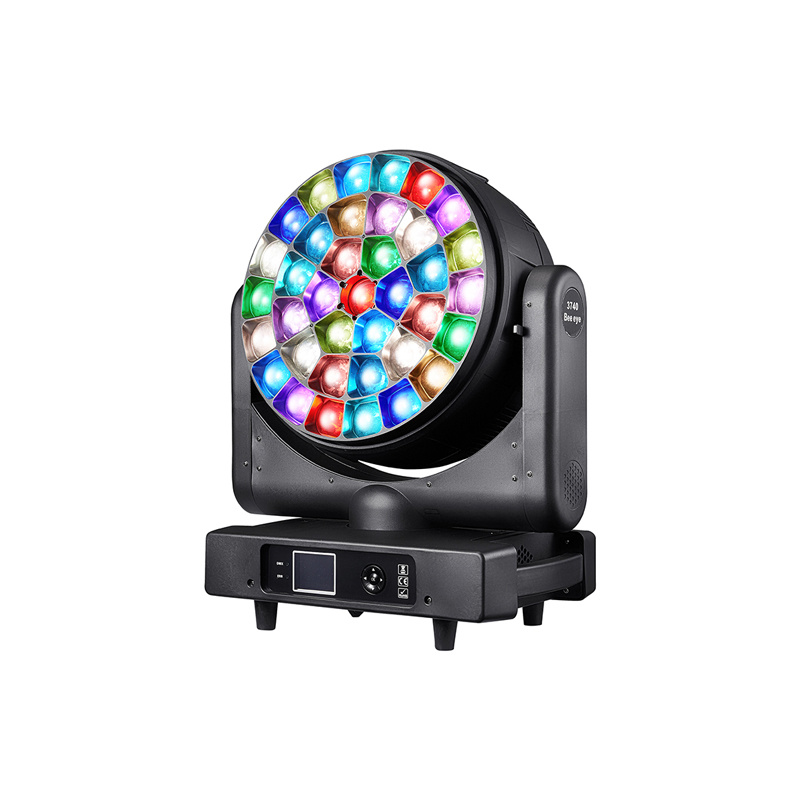
How Many Beam Lights Do You Actually Need?
There is no universal answer because every venue is different.
However, the following guidelines can serve as a starting point.
Venue TypeRecommended Quantity
Small Bar or Club 4–6 Fixtures
Wedding Venue 4–10 Fixtures
Medium Event Stage 8–16 Fixtures
Large Concert Stage 16–32 Fixtures
Festival Production 24+ Fixtures
The final number depends on ceiling height, stage dimensions, programming requirements, and budget.
Are LED Beam Lights Worth the Investment?
For most venues, the answer is yes.
Modern LED technology has improved dramatically in recent years. Today's LED beam lights offer impressive brightness while consuming less electricity and requiring less maintenance than traditional lamp-based fixtures.
For rental companies and venue operators, these savings can add up significantly over time.
However, extremely large outdoor productions may still benefit from high-powered lamp fixtures when maximum throw distance is required.
Frequently Asked Questions
Do beam lights need haze or fog to work properly?
No, but haze greatly enhances the visual impact of beam lights.
Without atmospheric effects, the audience primarily sees where the light lands. With haze, they can see the entire beam path, creating the dramatic aerial effects that beam lights are famous for.
What beam angle is best?
Most professional beam fixtures use beam angles between 1° and 5°.
Narrower beam angles generally produce stronger long-distance effects and sharper aerial beams.
Are beam lights suitable for small venues?
Absolutely.
Many compact LED beam lights are specifically designed for clubs, lounges, wedding venues, and small event spaces.
The key is selecting fixtures that match the size of the venue.
How long do LED beam lights last?
High-quality LED beam fixtures typically offer operating lifespans ranging from 20,000 to 50,000 hours, depending on usage conditions and component quality.
Can beam lights be controlled through DMX?
Yes.
Most professional beam lights support DMX512 control, allowing users to manage movement, colors, gobos, prisms, dimming, and other advanced effects.
Final Thoughts
Beam lights have earned their place as one of the most powerful tools in modern stage and event lighting. Their ability to create visible movement, dramatic aerial effects, and immersive environments makes them an essential fixture for concerts, nightclubs, festivals, weddings, and corporate productions.
Before making a purchase, focus on your venue size, lighting goals, control requirements, and long-term operating costs rather than simply comparing wattage numbers. The right beam light system can deliver years of reliable performance while significantly enhancing the visual experience of your audience.
Whether you're upgrading an existing venue or building a new lighting setup from scratch, investing in quality beam lights is often one of the most effective ways to elevate your production value and create unforgettable experiences.
Previous Page
Previous Page
More Cases


Online Message
Quick Links
Contact Information
Address: A8 Building Meiwang Industrial Park, Guangtang south street, Huadu District,Guangzhou, China.
Phone: +86 159 7549 0982
WhatsApp:+86 158 1889 3706