
Kinetic Lights Price List 2026 | Full Cost Guide
Classification:
summary description]
Searching for “kinetic lights price list 2026” usually means one thing: you’re planning a real project, and you need real numbers.
Maybe you're upgrading a nightclub.
Maybe you're quoting a client for a stage production.
Or maybe you’re comparing suppliers before placing a bulk order.
Either way, you don’t want vague ranges. You want clarity.
Let’s break down what kinetic lighting actually costs in 2026 — and just as importantly, what influences those prices.
First, What Exactly Are You Paying For?
Kinetic lighting systems aren’t single fixtures. They’re systems.
Each setup typically includes:
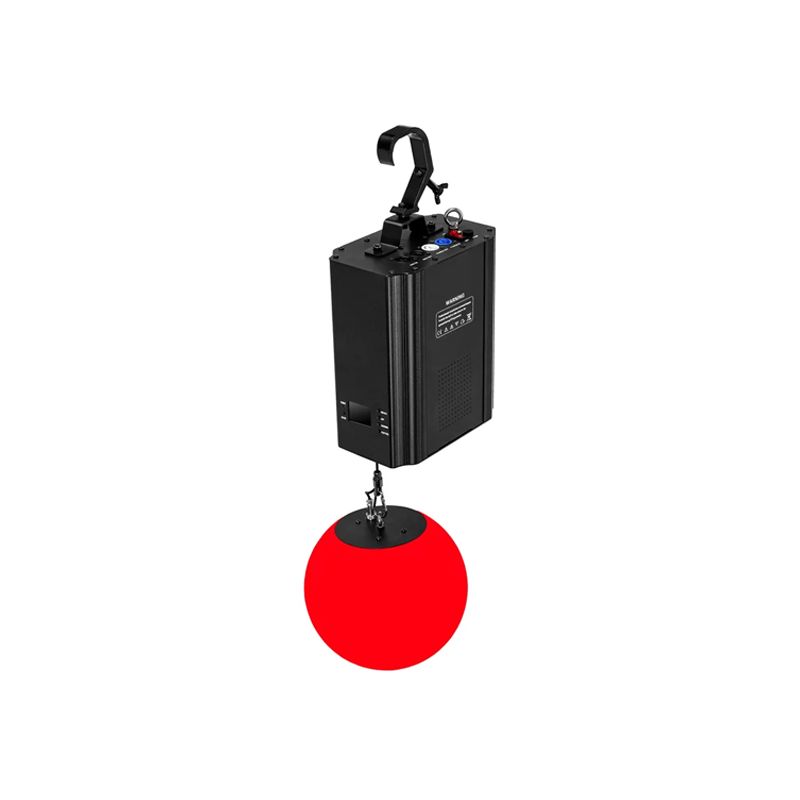
- A DMX winch (the motorized lifting unit)
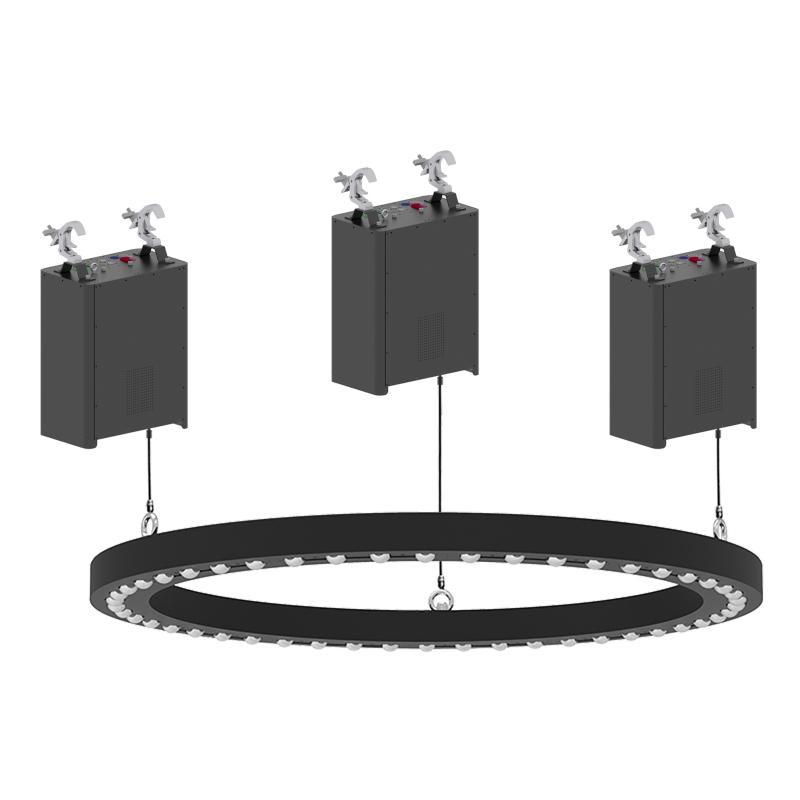
- A lighting fixture (ball, tube, bar, ring, or custom shape)
- Control system compatibility
- Cables, rigging, and integration
When people compare prices online, they often compare incomplete systems. That’s where confusion starts.
2026 Kinetic Lights Price Overview
Below is a realistic market reference based on global supplier pricing in 2026.
These are not “too good to be true” factory teaser prices — they reflect what most serious buyers are actually paying.
1. DMX Winch Pricing (The Core Component)
The winch is the heart of the system. And it’s where most of your budget goes.
Standard 3–6m Lifting Winch
$280 – $450 per unit
6–9m Professional Winch
$480 – $850 per unit
9–12m Touring Grade Winch
$900 – $1,500 per unit
Why such a gap?
Because lifting height, motor torque, brake system quality, and internal electronics all matter. A quiet, stable motor costs more. A winch that runs smoothly every night for years costs more.
And for commercial venues, reliability is not optional.
2. Kinetic Lighting Fixture Prices (2026)
Now let’s look at the visible part — the lighting element.
Kinetic LED Ball (15–30cm)
$120 – $350
Kinetic LED Tube (60–150cm)
$180 – $420
Kinetic Pixel Bar
$250 – $600
Kinetic Ring or Custom Design
$450 – $1,200
Simple RGB models sit at the lower end. Pixel-mapping capable fixtures cost significantly more — but they unlock serious visual possibilities.
3. Full Set Pricing (Winch + Fixture)
Most buyers purchase complete sets.
Here’s what typical project pricing looks like:
- 10 Sets: $4,500 – $9,000
- 20 Sets: $8,500 – $17,000
- 50 Sets: $20,000 – $45,000
- 100 Sets: $38,000 – $85,000+
Large projects benefit from volume discounts. Smaller installations pay closer to standard pricing.
Why Do Quotes Vary So Much?
If you've already requested quotations, you've probably noticed big differences between suppliers.
That’s normal.
Here’s what usually causes it.
Motor Quality
This is the silent deal-breaker.
Lower-cost winches often:
- Generate noticeable noise
- Have positioning drift
- Overheat during long shows
- Wear out quickly
High-grade motors are smoother. Quieter. More precise. And they last.

That difference doesn’t always show up in a spec sheet — but you’ll feel it after six months of operation.
Lifting Height
The higher the lift, the higher the price.
It’s not just an extra cable. It requires stronger internal components, better braking systems, and more torque.
A 9-meter winch can cost 30–50% more than a 3-meter version. That’s normal.
Control Compatibility
Basic DMX control is affordable.
Advanced pixel mapping — especially if you're integrating with Madrix or professional media servers — increases system cost. But for high-end venues, it’s worth it.
Dynamic visual choreography is what separates ordinary lighting from immersive stage design.
Certifications and Compliance
If you're importing into Europe or North America, compliance matters.
CE, ETL, or other certifications increase manufacturing cost. But skipping them can lead to customs delays or insurance complications.
Sometimes paying slightly more upfront prevents major issues later.
The Hidden Costs Nobody Mentions
When people search “kinetic lights price list 2026,” they usually focus on the unit price.
But the total project cost includes more.
Control Software
Professional lighting control licenses can range from $1,000 to $3,000, depending on the platform.
Shipping
In 2026, freight rates have stabilized compared to the pandemic era — but they still matter.
- Air freight (fast): expensive
- Sea freight (economical): 30–45 days
Shipping 50 sets by air could cost $3,000–$6,000.
By sea, maybe $800–$1,800.
Installation & Rigging
Don’t forget:
- Truss systems
- Labor
- Structural reinforcement
- Safety cables
These expenses add up quickly in permanent installations.
Is Cheaper Better?
Honestly? Rarely.
A failed motor during peak hours costs more than the money saved upfront.
Cheap systems often suffer from:
- Inconsistent color output
- Cable wear
- Poor synchronization
- Shorter lifespan
For commercial operators, downtime is expensive.
It’s smarter to focus on durability, warranty (minimum 1–2 years), and after-sales support rather than chasing the lowest number.

Example: 2026 Nightclub Budget Scenario
Let’s say you’re installing 30 kinetic LED balls with a 6m lifting height.
Rough estimate:
- 30 Winches: ~$12,000
- 30 LED Balls: ~$6,000
- Controller System: ~$2,000
- Shipping: ~$1,500
- Installation: ~$3,000
Total investment: around $24,000–$25,000.
For many venues, that level of upgrade significantly increases perceived production value — and often pays for itself through higher ticket pricing and VIP experiences.
2026 Market Outlook
Compared to previous years, pricing in 2026 is more stable.
More manufacturers are competing globally. LED component costs have normalized. Logistics is less volatile.
At the same time, demand for custom kinetic installations is growing. Unique designs — rings, flowers, complex shapes — are becoming more common in premium venues.
Standard systems are competitive. Custom systems command higher margins.
Final Thoughts: What Should You Expect to Spend?
Realistically, in 2026:
- Small installation (10 sets): $5,000–$9,000
- Medium venue (30–50 sets): $15,000–$40,000
- Large production (100+ sets): $40,000–$85,000+
But the real question isn’t just cost.
Its value.
Kinetic lighting isn’t just decoration. It changes how audiences experience space. It transforms ceilings into moving architecture. And when done right, it becomes the visual identity of a venue.
Budget wisely. Choose stable systems. Think long-term.
Because in this industry, reliability is part of the show.
Previous Page
Previous Page
More Cases


Online Message
Quick Links
Contact Information
Address: A8 Building Meiwang Industrial Park, Guangtang south street, Huadu District,Guangzhou, China.
Phone: +86 159 7549 0982
WhatsApp:+86 158 1889 3706