
Beam Moving Head Light: Complete Buying Guide
Classification:
summary description]
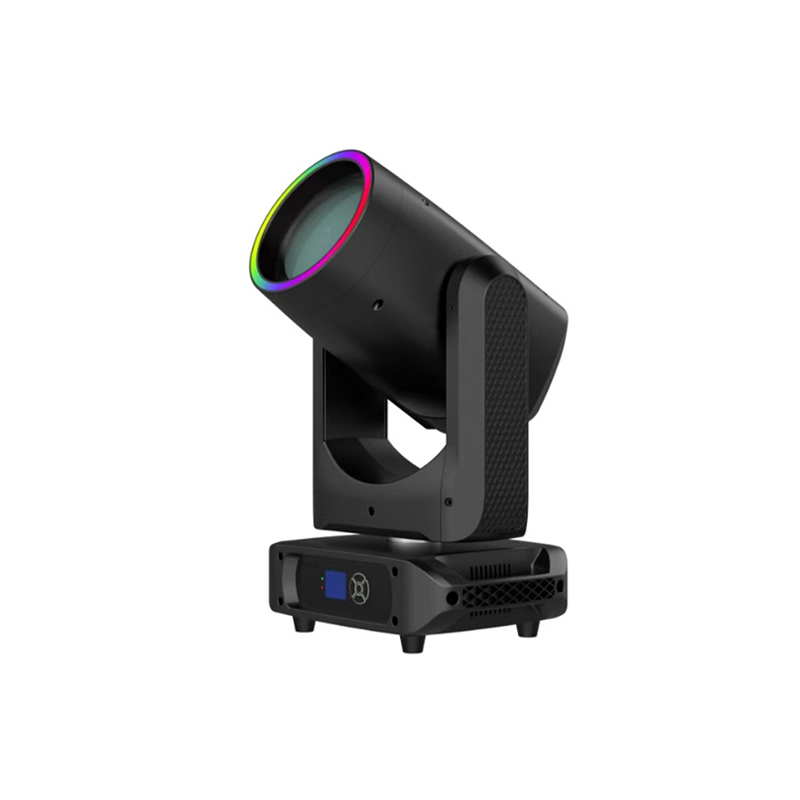
A beam moving head light is designed to create narrow, concentrated beams that can move across a stage, dance floor, nightclub, or concert venue. Unlike a fixed light, its motorized pan and tilt system allows the beam to change direction during a show.
But choosing one is not simply about wattage. Beam angle, optical output, movement accuracy, DMX control, focus, prism effects, and installation distance all affect the final result.
What Is a Beam Moving Head Light?
A beam moving head light combines a high-output light source with a narrow optical system and motorized movement. Most professional models support DMX512 and may include features such as:
- Narrow beam optics
- Motorized pan and tilt
- Color wheel
- Gobo wheel
- Rotating prism
- Focus
- Strobe and dimming
The exact configuration varies between models, so two fixtures with similar wattage can still produce very different results.
Where Are Beam Moving Head Lights Used?
Beam moving heads are mainly used for aerial lighting effects.
Concerts
Multiple fixtures can be installed on rear, side, or overhead trusses. When programmed together, they create sweeping beams, symmetrical movements, and fast effects that follow the music.
Nightclubs
Nightclubs often use beam moving heads with haze to create visible light shafts above the dance floor. Beam angle, movement speed, prism effects, and control compatibility are especially important here.
DJ and Event Lighting
For mobile DJs and event companies, flexibility matters. Weight, setup time, power requirements, DMX compatibility, and transport durability should be considered alongside light output.
Rental Companies
Rental users should also think about maintenance. Ask whether the manufacturer can provide spare motors, fans, PCBs, optical parts, and other replacement components.
Beam vs. Spot vs. Wash
Choosing the right fixture type comes before comparing individual models.
| Type | Main Purpose |
| Beam | Narrow aerial effects |
| Spot | Gobo and pattern projection |
| Wash | Wide-area illumination |
| Hybrid | Combination of beam, spot and wash |
Choose a beam moving head when your priority is a concentrated beam moving through the air. If you need broad stage coverage, a wash light may be more suitable.

How Does Beam Angle Affect Performance?
Beam angle determines how widely the light spreads.
A narrow angle creates a tighter beam and can work well for long-throw aerial effects. A wider angle covers more space but produces a less concentrated beam.
The right choice depends on your installation distance.
A fixture mounted 15 meters above a stage has different requirements from one placed only 3 meters away. For this reason, give the supplier your actual throw distance when comparing models.
Is Higher Wattage Always Better?
No.
Wattage describes electrical power, not the complete optical performance of the fixture.
When comparing two models, also check:
- Lux at 5m or 10m
- Beam angle
- Light-source type
- Beam quality
- Throw distance
- Optical design
A lower-wattage fixture with a better optical system can sometimes produce a more useful beam than a higher-wattage model.
Key Specifications to Check
Light Source
Check whether the fixture uses LED or discharge technology and understand the differences in output, power consumption, heat, and maintenance.
Pan and Tilt
Many professional fixtures offer around 540° pan and 270° tilt. If several fixtures need to move together, accurate positioning becomes important.
Gobo and Prism
Gobos add projected patterns, while prisms split the beam into multiple directions. If your main goal is a clean aerial beam, optical output may matter more than having a large number of effects.
DMX Control
Check the actual DMX channel modes rather than simply looking for “DMX512” on the specification sheet. Channel count, RDM support, connectors, and compatibility with your lighting console can affect installation and programming.
Do You Need Haze?
If you want visible aerial beams, haze can make a major difference.
Without haze, the beam is mainly visible when it reaches a surface. With haze in the air, the light path becomes visible, creating the familiar concert and nightclub beam effect.
The goal is controlled haze. Too little may hide the beam, while excessive haze can reduce visibility.
Common Buying Mistakes
Choosing by wattage alone: Output depends on more than power consumption.
Ignoring throw distance: A fixture suitable for a large stage may not be ideal for a small venue.
Focusing on effects: More gobos and programs do not compensate for weak optical performance.
Forgetting control compatibility: Always check the DMX chart before integrating new fixtures.
Ignoring maintenance: For commercial use, spare parts and after-sales support can affect the real cost of ownership.
Questions to Ask the Manufacturer
Before placing a bulk order, ask:
- What is the actual beam angle?
- What is the lux output at 5m and 10m?
- Can you provide a real beam test video?
- What are the pan and tilt ranges?
- How many DMX channels are available?
- Does the fixture support RDM?
- What gobos and prisms are included?
- What is the warranty period?
- Are spare parts available?
- What is the production lead time?
These questions help you compare the actual product rather than just the marketing specification.
Beam Moving Head Light FAQ
What is a beam moving head light used for?
It is mainly used for narrow, moving aerial effects in concerts, nightclubs, DJ shows, festivals, and stage productions.
What beam angle should I choose?
There is no universal answer. Choose according to the installation distance and the visual effect you want.
Is a beam moving head better than a spot?
They serve different purposes. Beam fixtures focus on narrow aerial effects, while spot fixtures are better suited to gobo projection.
How many watts do I need?
It depends on venue size, throw distance, beam angle, and ambient lighting. Compare measured output instead of wattage alone.
Can beam moving heads be used outdoors?
Only when the fixture is designed for outdoor conditions; check its IP rating and operating-temperature specifications before installation.
Final Thoughts
The right beam moving head light is not necessarily the most powerful or the one with the longest feature list.
Start with your venue, installation distance, and desired visual effect. Then compare optical output, beam angle, movement, DMX control, maintenance, and supplier support.
For a bulk purchase, ask for real test data before making the decision. A beam test at your intended working distance can reveal much more than a product photograph.
Previous Page
More Cases


Online Message
Quick Links
Contact Information
Address: A8 Building Meiwang Industrial Park, Guangtang south street, Huadu District,Guangzhou, China.
Phone: +86 158 1889 3706
WhatsApp:+86 158 1889 3706