
PAR Can Stage Lights: How to Choose the Right LED PAR
Classification:
summary description]
When choosing stage lighting equipment, many buyers focus on brightness and price first. However, a good lighting system is not only about how powerful a fixture is. Instead, the right light needs to match the venue, performance style, control system, and long-term usage requirements.
Among different types of stage lighting fixtures, PAR can stage lights remain one of the most popular choices for concerts, theaters, clubs, churches, wedding events, and rental companies.
The reason is simple: PAR lights are reliable, easy to operate, and effective for creating wide, even stage coverage.
But before purchasing, many buyers still have questions:
- Which type of PAR light is suitable for my project?
- Is LED PAR better than traditional PAR cans?
- Should I choose RGB, RGBW, or RGBAW+UV?
- How many PAR lights are needed for a stage?
- What specifications should I check before buying?
This guide will help you identify the key factors and avoid common mistakes when selecting PAR can stage lights.
What Are PAR Can Stage Lights?
PAR can stage lights are professional lighting fixtures designed to produce a focused or wide beam of light for stage illumination.
The term “PAR” comes from Parabolic Aluminum Reflector, which describes the reflector technology originally used in traditional stage lamps.
Today, most professional PAR fixtures use LED technology instead of halogen bulbs. As a result, modern LED PAR can lights combine:
- High brightness output
- Low power consumption
- Long lifespan
- DMX control capability
- Flexible color mixing
Unlike moving head lights, PAR lights usually remain fixed in one position. As a result, their main purpose is to provide stable illumination rather than movement effects.
Typical applications include:
- Stage wash lighting
- Background color effects
- Performer illumination
- Architectural lighting
- Event decoration
For many professional lighting systems, PAR lights are still the foundation of the entire setup.
Why Are LED PAR Can Stage Lights Still Popular?
Although the market now has many advanced lighting fixtures, including moving heads and laser effects, PAR lights continue to play an important role.
They continue to matter because they solve a basic but essential lighting problem: help buyers cover an area with consistent and controllable light.
1. Wide and Even Lighting Coverage
A stage usually needs more than just impressive effects. Performers must be clearly visible, and the audience needs a comfortable visual experience.
PAR lights are excellent for:
- Front lighting
- Side lighting
- Background washing
- Color atmosphere creation
For example, a concert may use white PAR lights to illuminate musicians while using RGBW PAR lights behind the stage to create different moods during performances.
2. Easy Control and Installation
Compared with complex intelligent fixtures, PAR lights are much easier to install and manage.
Most professional models support:
- DMX512 control
- Auto programs
- Sound activation mode
- Master/slave operation
This makes them suitable for both professional productions and smaller venues that need simple setup and control.
A small event company can quickly set up a lighting system without requiring complicated programming.
3. Lower Operating Cost
For rental companies and event suppliers, equipment reliability matters. That is why LED PAR lights reduce long-term costs because they:
LED PAR lights reduce long-term costs because they:
- Consume less electricity
- Require less maintenance
- Produce less heat
- Have longer operating life
Although some low-cost fixtures may appear attractive initially, unstable performance can create higher replacement costs later.
How to Choose the Right PAR Can Stage Lights?
Choosing a PAR light is not simply about selecting the highest wattage model; it is about matching the fixture to the project. Instead, a suitable fixture depends on several factors:
A suitable fixture depends on several factors:
- Venue size
- Lighting purpose
- Required brightness
- Beam angle
- Color requirements
- Control system
1. Consider the Application
Different projects require different PAR configurations, so choose features based on the venue and lighting goal. For example:
Small Events and Bars
For small venues, compact LED PAR lights are usually enough.
Recommended features:
- 50W–100W LED output
- RGB or RGBW color mixing
- Simple DMX control
- Lightweight design
Common applications:
- Small parties
- Bars
- Wedding decoration
- Mobile DJ setups
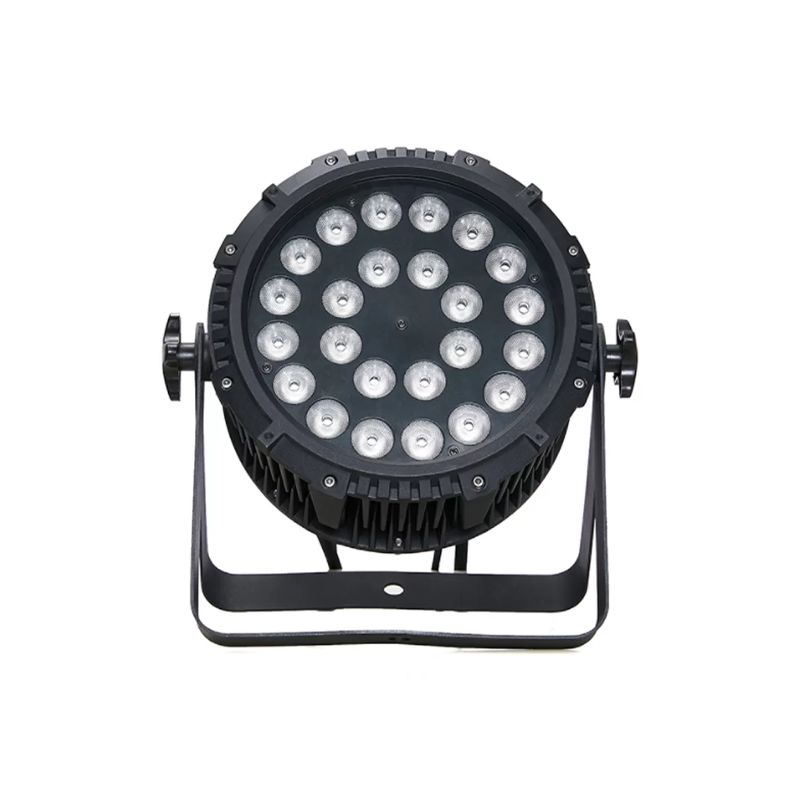
Professional Stage and Concerts
Medium and large stages usually require higher-output fixtures, so choose models that fit the coverage area. In that case, recommended features include:
Recommended features:
- 100W–200W LED power
- RGBW or RGBAW+UV system
- DMX512 compatibility
- Adjustable beam angle
Applications:
- Concerts
- Theaters
- Churches
- Corporate events
Outdoor Events
Outdoor lighting requires additional protection, so check durability before buying. In that case, important specifications include:
Important specifications include:
- IP65 waterproof rating
- Durable housing
- Stable cooling system
- Weather-resistant components
A standard indoor PAR light may fail quickly when exposed to rain or humidity.
RGB vs RGBW vs RGBAW+UV PAR Lights
One of the most common questions from buyers is:
“Which color system should I choose?”
The answer depends on how you plan to use the lights. Here is how each option differs:
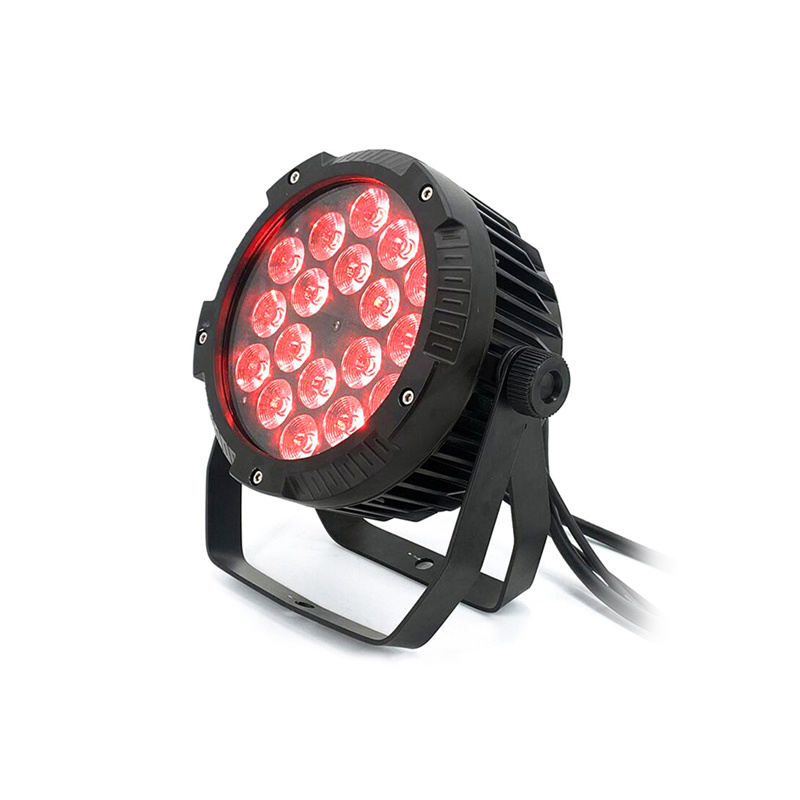
RGB PAR Lights
RGB fixtures use:
- Red
- Green
- Blue
LED channels.
Advantages:
- Affordable
- Good for color effects
- Suitable for entertainment lighting
However, RGB lights often struggle to produce clean white light.
They are better suited for:
- Clubs
- Decorative lighting
- Small events
RGBW PAR Lights
RGBW adds a dedicated white LED channel. As a result, it creates a major improvement.
This creates a major improvement.
Benefits:
- Better white output
- More natural skin tones
- Improved stage visibility
RGBW PAR lights are commonly used for:
- Concert stages
- Churches
- Theater productions
- Professional events
For most commercial stage applications, RGBW offers a good balance between performance and cost.
RGBAW+UV PAR Lights
High-end PAR fixtures may include:
- Red
- Green
- Blue
- Amber
- White
- UV
These additional channels provide more creative control.
For example:
- Amber creates warmer tones.
- White improves clarity
- UV creates special effects.
They are often selected for:
- Nightclubs
- Large entertainment venues
- Professional productions
Understanding Beam Angle Before Buying
Beam angle is another important factor that many buyers overlook, so choose it based on the coverage you need. It determines how wide the light spreads.
It determines how wide the light spreads.
Common PAR light beam angles include:
- 15°
- 25°
- 40°
- 60°
A narrow beam angle creates stronger intensity over a smaller area. In that case, it is suitable for:
Suitable for:
- Highlighting performers
- Long-distance lighting
- Smaller stages

A wider beam angle covers more space. In that case, it is suitable for:
Suitable for:
- Stage washing
- Background lighting
- Large venues
For example, a 25° PAR light may work well for performer lighting, while a 60° fixture is better for covering a wide stage background.
DMX Control and Important Features of PAR Can Stage Lights
For professional stage applications, lighting control is just as important as brightness, so evaluate control options as carefully as output.
Most professional PAR can stage lights support DMX512, which allows lighting operators to control multiple fixtures through one console.
With DMX control, users can adjust:
- Brightness
- Color mixing
- Strobe speed
- Lighting scenes
- Dynamic effects
This is especially useful for concerts, theaters, and rental companies where lighting needs to change quickly during performances.
How Does DMX512 Work With PAR Lights?
A typical DMX lighting system connects fixtures through DMX cables. The basic setup looks like this:
The basic setup looks like this:
Lighting Console → DMX Cable → PAR Light → PAR Light → PAR Light
Each fixture receives control signals through assigned addresses. For example:
For example:
- Fixture 1: Address 001
- Fixture 2: Address 009
- Fixture 3: Address 017
The lighting operator can control every fixture individually or combine multiple lights into one scene.
How Many DMX Channels Do You Need?
Different PAR lights offer different DMX channel modes. For example:
A simple PAR fixture may provide:
4 Channel Mode
Usually includes:
- Red
- Green
- Blue
- Dimmer
Suitable for basic color control.
6–8 Channel Mode
May include:
- RGBW adjustment
- Strobe
- Master dimmer
- Auto programs
Suitable for small professional setups.

10+ Channel Mode
Provides more detailed control:
- Individual color adjustment
- Advanced effects
- Fine dimming control
- Color temperature adjustment
This type is preferred for professional stage productions.
Common Mistakes When Buying PAR Can Stage Lights
Selecting stage lighting equipment requires more than comparing prices, so evaluate the fixture against your actual project needs. It also requires careful evaluation of performance and fit.
Many buyers make decisions based on incomplete information, which can lead to poor performance later.
Mistake 1: Only Looking at Wattage
A common misunderstanding is:
“Higher wattage means brighter light.”
This is not always true.
Actual performance depends on:
- LED efficiency
- Optical lens design
- Cooling system
- Light output quality
A well-designed 150W LED PAR can outperform a low-quality 200W fixture.
When comparing products, check more than the power rating and compare the full performance details.
Mistake 2: Ignoring Color Quality
Cheap PAR lights may produce uneven colors.
Common problems include:
- Different colors between fixtures
- Poor white output
- Visible LED spots
- Uneven brightness
For professional applications, pay attention to:
- Color mixing technology
- CRI value
- Dimming smoothness

Mistake 3: Choosing Indoor Fixtures for Outdoor Projects
A low-cost indoor PAR light may not survive outdoor conditions.
Before purchasing, confirm:
- IP rating
- Weather protection
- Operating temperature range
For outdoor events, waterproof PAR lights are usually the safer choice.
Mistake 4: Choosing a Supplier Only by Price
Price is important, but reliability matters more for professional lighting.
A cheaper fixture may create problems such as:
- Color inconsistency
- Short lifespan
- Poor customer support
- Difficult repairs
For rental companies and distributors, product stability directly affects business reputation.
How to Choose a Reliable PAR Can Stage Lights Manufacturer?
For businesses purchasing in bulk, the supplier selection process is critical.
A professional stage lighting manufacturer should provide:
1. Product Testing Before Shipment
Reliable factories usually test:
- LED performance
- DMX communication
- Power stability
- Long-time operation
This reduces the risk of receiving faulty products.
2. Technical Support
A good supplier should help with:
- Product selection
- DMX setup
- Installation questions
- Troubleshooting
Technical support becomes especially important for overseas customers.
3. Customization Capability
For distributors and project contractors, customization can be valuable.
Common options include:
- Logo printing
- Customized housing
- Different power configurations
- OEM/ODM services
Frequently Asked Questions About PAR Can Stage Lights
Are PAR can stage lights still used today?
Yes. Although many new lighting technologies have appeared, PAR lights remain widely used because they provide reliable and efficient stage illumination.
They are still common in:
- Concerts
- Clubs
- Churches
- Theaters
- Events
How many PAR can stage lights do I need for a stage?
The required quantity depends on stage size and lighting goals.
General reference:
Small stage (3–5 meters):
4–8 PAR lights
Medium stage (5–10 meters):
8–16 PAR lights
Large productions:
20+ fixtures combined with other lighting equipment
The final number depends on brightness requirements and installation position.
Are LED PAR lights better than traditional PAR cans?
For most modern applications, yes.
LED PAR lights offer:
- Lower energy consumption
- Longer lifespan
- Less heat
- Better color control
- DMX compatibility
They have become the standard choice for professional stage lighting.
What is the best beam angle for PAR lights?
There is no single best beam angle.
Choose based on the application:
- 15°–25°: Focused lighting
- 40°: General stage wash
- 60°: Large area coverage
Can PAR lights be used outdoors?
Yes, but choose waterproof models.
Outdoor PAR lights should ideally have:
- IP65 protection
- Durable housing
- Weather-resistant design
Final Thoughts: Choosing the Right PAR Can Stage Lights
PAR can stage lights remain one of the most practical lighting solutions for professional and commercial applications.
Their popularity comes from three main advantages:
- Reliable performance
- Flexible applications
- Easy control
However, choosing the right fixture requires looking beyond price.
Before purchasing, consider:
- Where the lights will be used
- Required brightness
- Beam angle
- Color system
- DMX requirements
- Supplier experience
For small events, basic RGB PAR lights may be enough. For professional stages, RGBW or RGBAW+UV fixtures with DMX control provide better flexibility and long-term value.
A well-designed PAR lighting system can improve stage visibility, create a better atmosphere, and provide a more professional experience for audiences.
More Cases


Online Message
Quick Links
Contact Information
Address: A8 Building Meiwang Industrial Park, Guangtang south street, Huadu District,Guangzhou, China.
Phone: +86 158 1889 3706
WhatsApp:+86 158 1889 3706