
What Is a Kinetic Ball? Dynamic Stage Lighting Explained
Classification:
summary description]
When it comes to modern stage design, few elements are as captivating—or as flexible—as the kinetic ball. These are more than just glowing orbs hanging from the ceiling. They're programmable, motor-driven LED spheres that move vertically in real-time, synchronized with lighting cues, music, or custom visual sequences. In recent years, kinetic balls have become a visual signature at concerts, music festivals, and immersive art installations.
Why the sudden popularity? Because they're visually dynamic, endlessly customizable, and create a powerful sense of depth that static lighting simply can’t replicate.
The Rise of Kinetic Ball Systems in Event Production
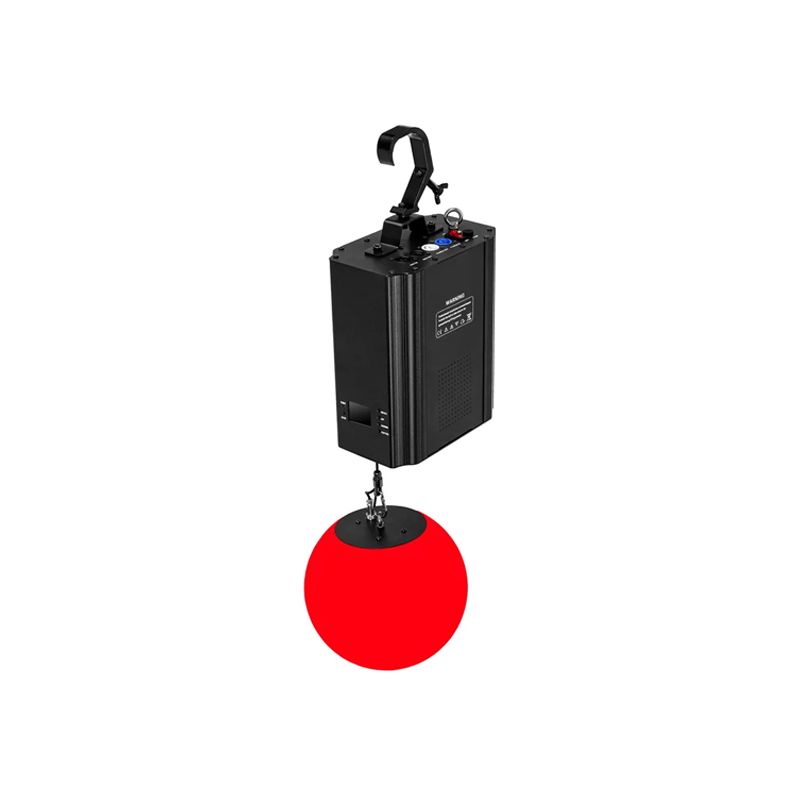
Think about it. Traditional lighting mostly works in two dimensions. Kinetic balls add a third. They move—literally. Suspended from precision-controlled winch motors, these LED balls glide up and down in synchronized patterns, creating waves, pulses, or even 3D shapes in mid-air. It’s not just lighting—it’s choreography.
Whether it’s 20 units or 200, the effect can be stunning. Audiences aren't just watching the stage anymore; they're immersed in it.
What Makes a Kinetic Ball System Work?
At the core of every kinetic ball setup, three things must work in perfect harmony:
- Winch motor – This is what moves the ball up and down. The winch is motorized, often DMX or Art-Net compatible, and precision-tuned for accurate speed control.
- LED ball – Usually made of lightweight material like acrylic or polycarbonate, these balls house RGB or RGBW LED modules capable of vivid, full-color output.
- Control system – This is the brain. DMX512 or Art-Net allows lighting designers to pre-program complex sequences or run them live during performances.
Want real-time control that reacts to audio cues? That’s possible too—media servers and advanced show software can translate beats into motion almost instantly.
Where You’ll Find Kinetic Balls in Action
Kinetic lighting has moved beyond niche installations. These days, kinetic ball systems are being used in:
- Arena concerts – Picture hundreds of kinetic balls creating a wave effect across the venue ceiling as the bass drops.
- TV productions – They bring a touch of modern elegance to live broadcasts or talent shows.
- High-end nightclubs – Above the dancefloor, kinetic balls pulse and flow with the rhythm.
- Corporate events and exhibitions – Used to draw attention, build atmosphere, or even spell out logos in motion.
Planning and Installation: Not Just Plug and Play
Let's be clear—these systems aren't simple plug-and-play setups. Installation demands planning, and quite a bit of it.
You'll need to consider:
- Weight limits – Can the ceiling rigging support multiple winches?
- Cable management – DMX lines and power cables must be installed with safety in mind.
- Programming time – Creating custom light movement sequences takes time and testing. Weeks, sometimes.
It's not a casual DIY project. Partnering with professionals is essential if you're looking for a reliable, safe, and visually stunning result.
How Kinetic Balls Stack Up Against Traditional Lights
You’ve seen LED par lights, moving heads, and lasers. All great in their own right. But kinetic balls do something different—they occupy space. Not just with light, but with motion. With presence.
Instead of aiming light from point A to point B, these fixtures become part of the visual composition themselves. They’re not just tools—they’re design elements.
They also introduce an element of depth that static fixtures can’t provide. Think of them as a canvas, where each ball is a moving pixel in a giant three-dimensional painting.
Choosing the Right System
Looking to integrate kinetic balls into your next show or installation? Here’s what you should evaluate before you buy:
- Ball size – Common diameters range from 15cm to 30cm. Larger balls are more visible but heavier.
- LED quality – Go for high-brightness RGBW LEDs with smooth dimming and color mixing.
- Motor strength – Make sure the winch can handle the weight of your setup, especially if using heavier ball materials or long cable drops.
- Control compatibility – DMX and Art-Net are standard. Some systems even offer web-based programming.
- Supplier support – A good supplier offers not just hardware but guidance, documentation, and after-sales support.
Looking Ahead: What’s Next for Kinetic Lighting?
This technology is still evolving. In fact, we're just scratching the surface.
Manufacturers are working on AI-powered choreography, wireless winch systems, and even interactive installations that respond to motion sensors or crowd noise. Imagine a venue where the lighting moves not just to the music, but to the people.
We're entering an era where lighting no longer just illuminates the show. It is the show.
Final Thoughts
The kinetic ball is more than a trend—it's a revolution in lighting design. It adds movement, depth, and emotion in ways conventional lighting simply can’t. Whether suspended above a DJ booth, installed in a theater, or programmed for a one-night art installation, kinetic balls have proven their value time and again.
For those who want their event to be remembered, kinetic lighting is a tool worth investing in, not just for the visual effect, but for the lasting impression it leaves behind.
Frequently Asked Questions
1. Are kinetic balls weatherproof?
Some models are rated for outdoor use, but many are designed for indoor venues. Check IP ratings before installation.
2. Do I need custom software to run them?
Basic control can be done via DMX, but advanced effects may require proprietary or third-party software like Madrix or TouchDesigner.
3. How many kinetic balls make an impact?
Even a 5x5 grid (25 balls) can create a stunning effect in a medium-sized venue. It's about design, not just quantity.
4. Can I rent kinetic lighting for an event?
Yes, many lighting rental companies now offer kinetic ball systems with installation services.
5. Is there a safety risk involved?
Like any overhead rigging, safety is crucial. Use certified equipment and experienced installers to ensure structural integrity and performance reliability.
More Cases


Online Message
Quick Links
Contact Information
Address: A8 Building Meiwang Industrial Park, Guangtang south street, Huadu District,Guangzhou, China.
Phone: +86 158 1889 3706
WhatsApp:+86 158 1889 3706